Key Points
- Site Selection and Soil Quality Matter: Choose a location with natural drainage and clay-heavy soil for water retention. Avoid areas with sandy or rocky soil, as they may require liners to prevent leaks.
- Cost and Construction Timeline: The average cost of a 2-acre pond is around $60,000, with a construction timeline of 3–5 weeks, depending on soil conditions, excavation difficulty, and added features.
- Permits and Maintenance Are Essential: Permits are required if the pond impacts wetlands or natural water sources. Routine maintenance, including water quality management and shoreline protection, ensures long-term success.
Making a Splash: The Ultimate Guide to Installing a 2-Acre Pond
Have you ever dreamed of having a private pond for fishing, swimming, or simply enhancing your property’s beauty?
Or maybe you’re looking to create a water source for livestock while boosting your land’s value?
Building a 2-acre pond is an exciting venture, but it requires careful planning, smart budgeting, and ongoing upkeep.
In this guide, you’ll learn everything you need to know about 2-acre ponds, from site selection and excavation costs to permitting requirements and long-term maintenance strategies.
By the end, you’ll have the knowledge to confidently move forward with your pond installation while avoiding costly mistakes.
Ready to turn your vision into reality?
Give Bulletproof Pond and Lake a call or fill out the contact form today!
Planning and Design Considerations for a 2-Acre Pond
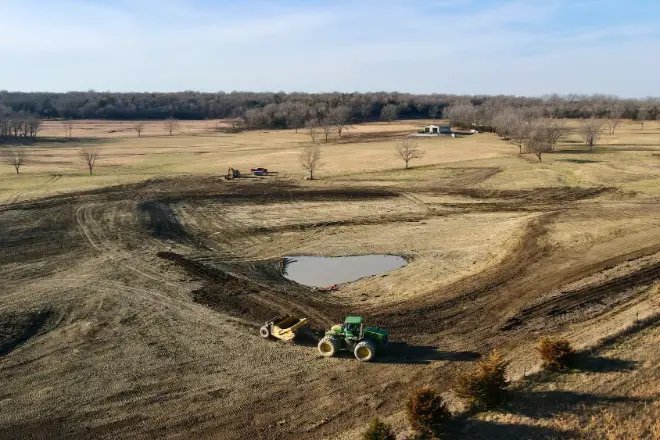
A well-thought-out pond design is essential for ensuring longevity, proper function, and a healthy ecosystem.
Before breaking ground, careful planning can help avoid costly mistakes while maximizing aesthetic appeal and usability.
Below are key considerations for site selection, soil analysis, environmental factors, and customization options.
Site Selection and Soil Analysis
Choosing the right location and understanding the soil type is crucial to building a 2-acre pond that holds water efficiently.
- Ideal Locations: Select an area with natural water drainage, avoiding locations too close to trees (which can cause root damage) or structures.
- Soil Testing: A pond built on sandy soils or rocky soil may require a liner to prevent leaks. Clay-heavy soil is ideal because it retains water naturally.
- Excavation Challenges: If the land contains rocky or sandy soils, excavation will require more labor and specialized equipment, increasing overall cost factors.
- Slope Considerations: A gentle slope on at least one side allows easier access for wildlife while reducing shoreline erosion.
Environmental and Regulatory Factors
Before digging, it’s critical to consider local environmental guidelines and obtain any necessary permits.
- Permitting Requirements: Local regulations may require approval from agencies such as the Army Corps of Engineers if your pond impacts wetlands or natural water sources.
- Erosion and Runoff Control: Poor design can lead to excessive muck accumulation or algae growth due to nutrient runoff.
- Wildlife Integration: A well-planned 2-acre pond can attract beneficial wildlife, such as amphibians and birds, helping to maintain a balanced ecosystem.
Design Features and Customization
A successful pond design balances functionality with aesthetic appeal, ensuring both durability and water quality over time.
- Depth Considerations: Ponds that are at least 8–12 feet are ideal for fishing ponds, as they help prevent excessive algae growth and provide a stable environment for largemouth bass, bluegill, or catfish.
- Fish Habitats and Structures: Adding fish structures, such as submerged logs, gravel beds, or artificial reefs, creates ideal conditions for rainbow trout and other species.
- Aquatic Plants: Incorporating native aquatic plants improves oxygen levels, prevents erosion, and enhances water quality by filtering excess nutrients.
By carefully considering site selection, excavation needs, and pond design, landowners in Kansas and surrounding states can develop a 2-acre pond that is both functional and visually appealing.
How Much Does a 2-Acre Pond Installation Cost?
Building a 2-acre pond is a major investment, and understanding the cost factors involved can help you plan effectively.
On average, you can expect to pay around $60,000 for a 2-acre pond installation.
Final costs can vary depending on soil type, excavation difficulty, added features, and ongoing maintenance costs.
Follow the link for more details on the cost of digging a 2-acre pond.
Additional Features and Enhancements
To enhance your pond’s function and aesthetic appeal, consider adding optional custom pond features:
- Fish Structures: Artificial reefs, rock piles, and submerged logs help maintain fish populations and improve habitat conditions for bass, bluegill, and other species.
- Limestone Rock Barriers: Installing limestone along the shoreline helps prevent erosion while naturally balancing pH levels, promoting a healthy ecosystem in your pond.
- Peninsula Additions: A custom-designed peninsula enhances aesthetic appeal, provides easy fishing pond access, and can be used to separate different areas of the water for recreation or wildlife conservation.
- Boat Ramp Installation: A well-built boat ramp allows for smooth water entry, making it easier to launch boats for fishing, leisure, or routine pond maintenance.
What Is the Permitting Process for 2-Acre Pond Construction?
Before starting digging, securing the proper approvals is essential to avoid legal issues and unexpected project delays.
Most ponds require permits, especially if they impact natural water sources or protected areas.
Understanding the requirements ensures a smooth process when building a new pond in Kansas and nearby states.
Understanding Permit Requirements
The need for permits varies based on location, shoreline impact, and whether your pond connects to public waterways.
- When Permits Are Necessary: If your pond alters drainage patterns, affects wetlands, or involves a dam, obtaining permits is required.
- Regulatory Agencies: In Kansas, permits may be required from state agencies and the Army Corps of Engineers if the pond impacts federally regulated waters.
- Environmental Considerations: Authorities assess how the pond could affect wildlife, water flow, and oxygen levels in nearby streams or lakes.
State-Specific Permitting Processes
The permitting process differs by state, but most ponds require similar steps:
- Kansas and Neighboring States: Local guidelines often require landowners to file site plans and show that their pond won’t negatively impact surrounding property.
- Common Permit Delays: Applications may be denied or delayed due to improper site assessments, failure to meet setback requirements, or missing environmental evaluations.
Steps to Obtain a Permit
Proper preparation speeds up the approval process and helps ensure compliance.
- Pre-Application Consultation: Meeting with local officials helps identify potential obstacles before submitting paperwork.
- Submitting Documentation: Required materials often include pond design plans, site surveys, and impact assessments.
- Approval Timeline: Processing time varies but typically takes several weeks to a few months.
Construction Timeline: How Long Does It Take to Build a 2-Acre Pond?
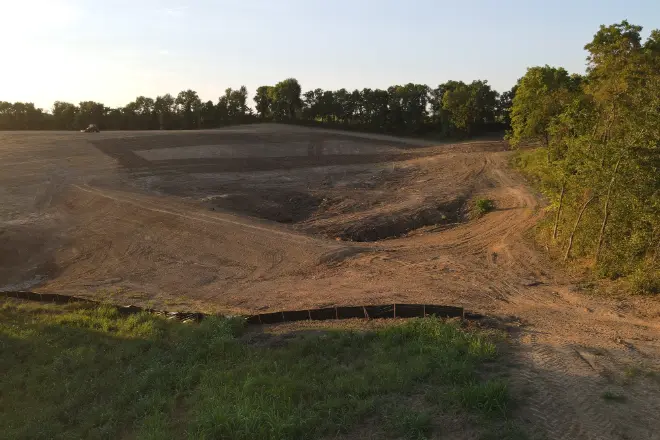
Building a 2-acre pond takes time, with several key phases that must be completed in the right order.
On average, it takes 3-5 weeks to install a 2-acre pond.
Factors like site conditions, digging complexity, weather, and additional features can all impact the overall timeline.
Here’s what to expect when planning your pond project in Kansas and the surrounding areas.
Phases of Construction
Each step of the pond installation process requires careful execution to ensure durability and long-term maintenance success.
Here are the typical phases of 2-acre pond construction:
- Site Preparation
- Clearing land, removing debris, and conducting final site surveys.
- Marking pond boundaries and adjusting land grading for proper drainage.
- Excavation & Digging
- Removing thousands of cubic yards of soil to reach the desired depth and shape.
- Shoreline & Dam Construction
- Stabilizing the shoreline with riprap or erosion-resistant materials.
- If a dam is necessary, compact soil layers to ensure water retention.
- Filling with Water
- Filling the pond with water from wells, spring sources, or rainfall.
Essential Maintenance for 2-Acre Ponds
Owning a 2-acre pond is a long-term commitment, requiring regular upkeep to ensure a balanced ecosystem and healthy fish populations.
Without proper maintenance, issues like algae blooms, muck buildup, and poor oxygen levels can arise.
Below are key strategies to keep your pond in top condition year after year.
Routine Maintenance Tasks
Ongoing care helps prevent costly repairs and keeps the water clear and thriving.
- Water Quality Management: Test for pH levels, nutrient content, and oxygen availability to prevent algae overgrowth.
- Shoreline Protection: Stabilize banks with native plants or riprap to minimize erosion.
- Muck Reduction: Regularly remove excess organic matter from the pond bottom to prevent nutrient overload.
Common Mistakes to Avoid When Building a 2-Acre Pond
Constructing a 2-acre pond is a significant investment, and avoiding common errors can save time, money, and frustration.
Many landowners make costly mistakes, leading to poor water quality and ongoing maintenance issues.
Here’s what to watch out for when planning your pond in Kansas.
Skipping the Permitting Process
Failing to obtain the required approvals can result in fines or forced modifications.
- Ignoring Local Regulations: Many ponds need permits, especially if they impact natural drainage or protected areas. Follow the link to learn more about the permitting process for pond construction.
- Unexpected Compliance Issues: Not following guidelines may lead to costly redesigns or restrictions on fish stocking and water usage. Remember, it is the property owner’s responsibility to acquire the necessary permits!
Choosing the Wrong Site or Soil Type
The site and materials used play a major role in a pond’s longevity.
- Poor Drainage Planning: Selecting an area without proper runoff control can lead to excessive muck buildup and erosion.
- Unsuitable Soil Conditions: Digging in sandy or rocky soil may require additional liners or compacting clay to prevent leaks.
Ignoring Long-Term Maintenance Needs
Failing to plan for ongoing care can result in poor water quality and unhealthy fish populations.
- Failure to Control Muck Buildup: Allowing organic debris to accumulate can degrade property value and require expensive dredging later.
Bulletproof Pond and Lake: Your Trusted Experts for 2-Acre Pond Installation
A well-planned 2-acre pond enhances your property, supports healthy fish populations, and remains easy to maintain with the right design and construction approach.
By understanding costs, digging requirements, aeration, and maintenance, you can avoid costly mistakes and create a thriving water feature that lasts for generations.
The pond contractors at Bulletproof Pond and Lake have the expertise, equipment, and industry knowledge to handle every stage of your pond installation—from site selection to shoreline stabilization.