Dive Into Your Dream Pond
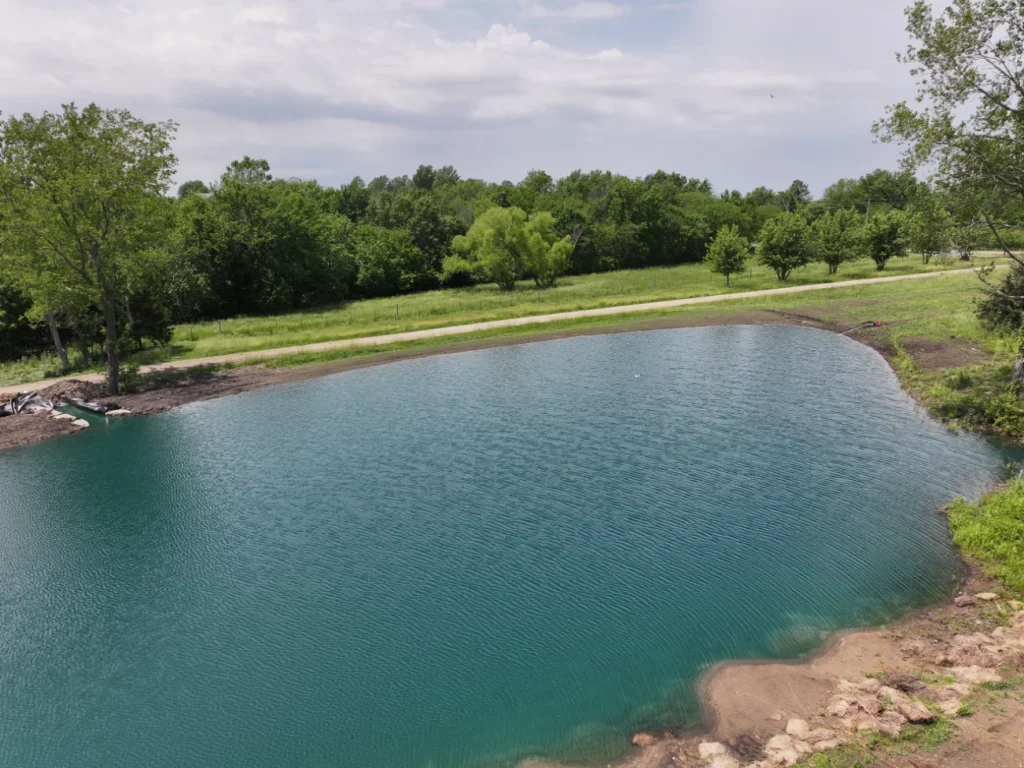
Ever dreamt of having a serene pond on your property where you can relax and enjoy nature? Or perhaps you’ve imagined a place for fishing and supporting local wildlife right in your backyard?
This comprehensive guide will teach you everything you need to know about building a large pond in Kansas City, KS, and surrounding areas.
You’ll discover the steps to plan, design, construct, and maintain your acreage pond installation, ensuring it thrives for years to come.
Dive in to transform your landscape into a tranquil oasis!
Planning Your Pond
Proper planning is essential when building ponds.
Selecting the right site and ensuring the soil is suitable will set the foundation for a successful project.
Site Selection
Choosing an appropriate location for your pond is crucial.
Consider the following factors:
- Slope: Ideal pond sites have a gentle slope to help with water flow and retention.
- Water Source: Ensure there is a reliable water source, such as a stream or storm runoff, to keep the pond filled.
- Proximity to Buildings: Locate the pond away from structures to prevent potential water damage.
Professional pond builders such as Bulletproof Pond and Lake will conduct a topographical assessment to determine the best site for your pond.
Soil Testing
Ensuring the soil is adequate for pond construction will help the pond hold water and remain structurally sound.
Here’s what to do:
- Soil Testing: Conduct soil sampling tests to check for sufficient clay content. Clay helps the pond retain water and prevents leaks. See the video above for an explanation of what soil sampling is and why it’s an essential step for building a long-lasting large pond.
- Methods: Use professional services or DIY kits to analyze soil composition. High clay content is essential for preventing water seepage. You may also want to contact the National Resources Conservation Service (NRSC) to discuss the type of soil you have on your property and whether it is suitable for installing a large pond.
By carefully selecting the site and testing the soil, you’ll lay a solid groundwork for a successful pond-building project.
Design and Permits
Proper pond design and obtaining the necessary permits are crucial steps in the pond-building process.
Understanding local laws and obtaining the necessary permits for dam construction is essential, as it helps avoid legal liabilities and regulatory hurdles.
Here’s what you need to know to ensure your pond project is well-planned and compliant with local regulations.
Pond Design
Effective pond design ensures your pond is functional and meets your needs.
Consider these elements:
- Key Design Elements: Depth, shape, and size are essential for the pond’s intended use, whether for fishing, irrigation, or aesthetic appeal.
- Types of Pond Designs:
- Farm Ponds: Ideal for irrigation and livestock watering.
- Recreational Ponds: Suitable for swimming, fishing, and other leisure activities.
- Wildlife Ponds: Designed to support local wildlife and promote biodiversity.
A well-thought-out pond design will help you achieve your goals, whether you’re creating a serene fish pond or a practical farm pond.
Permitting
Securing the appropriate permits is vital to ensure your pond complies with local, state, and federal regulations.
Here are the key points:
- Necessary Permits and Regulations:
- Check with local authorities for specific requirements.
- Professional pond builders can provide guidance on obtaining the necessary permits.
- Stormwater Pollution Prevention Plan (SWPPP): A Stormwater Pollution Prevention Plan (SWPPP) is required for managing runoff and protecting water quality.
- State and Federal Permits: Large ponds may require permits from agencies like the U.S. Army Corps of Engineers, which can add several thousand dollars to your budget.
- Environmental Impact: Ensure your pond construction complies with environmental standards to protect local ecosystems.
By addressing design and permitting early in the process, you can avoid potential legal issues and create a pond that meets your needs and regulatory requirements.
Construction Process
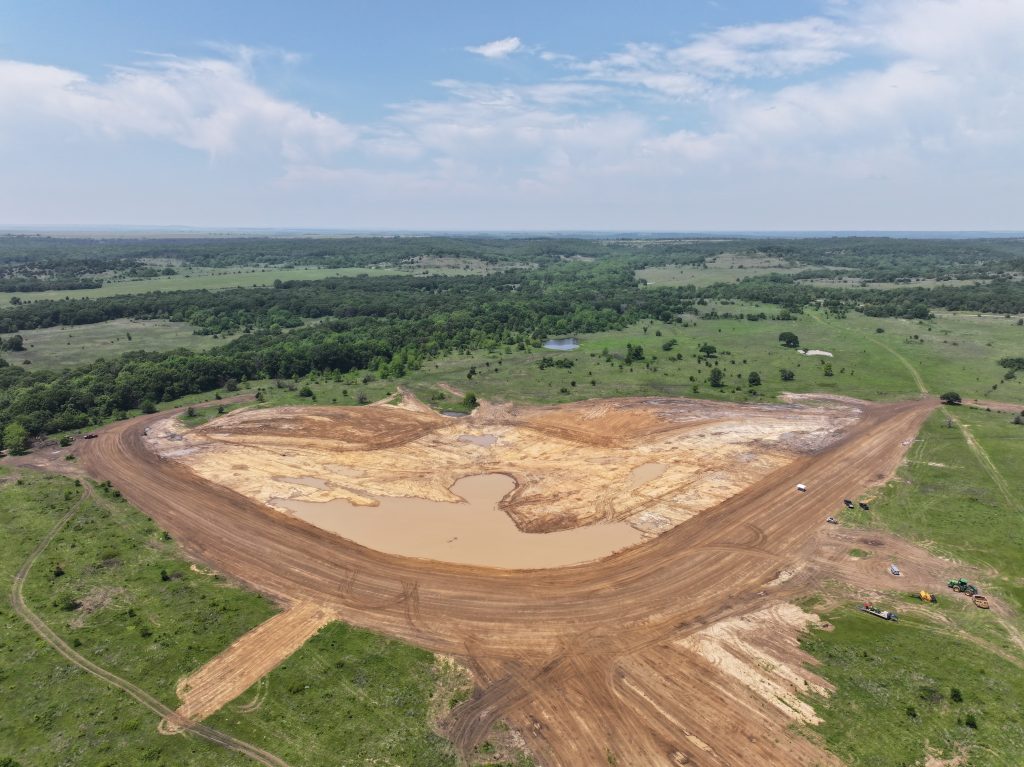
Constructing a pond involves several critical steps to ensure it functions correctly and lasts for years.
Here’s how to get started with your pond construction.
Excavation and Grading
Proper excavation and grading are essential for creating a functional pond basin.
Here’s what you need to know:
- Steps and Equipment Needed:
- Excavation: Use a highly efficient earthmoving scraper system, like those sold by John Deere. Using a backhoe, excavator, or skid steer loader to dig out a large pond basin is not recommended due to the significant amounts of soil that need to be moved. There is also a greater risk of the soil becoming waterlogged or improperly compacted if you do not use a scraper system. Follow the link to learn more about how to dig a pond.
- Grading: Ensure the pond site has the correct slope to promote water flow and retention.
- Detailed Steps for Pond Construction:
- Mark the pond area and remove topsoil.
- Excavate to the desired depth, maintaining a gradual slope.
- Compact the soil to prevent future settling.
Pond Lining and Sealing
Lining and sealing your pond is crucial to prevent water loss and ensure it holds water effectively.
- Methods for Ensuring Water Retention:
- Earthen Dam with a Clay Core: Constructing an earthen dam with a clay core that seals the pond from the back of the dam.
- Clay Lining: Utilize clay soil to line the pond, which naturally seals and holds water.
- Synthetic Liners: Pond liners, such as PVC or rubber, can provide an additional barrier against leaks.
- Materials for Lining:
- Bentonite clay is a popular choice for lining due to its ability to expand and seal cracks.
- Synthetic pond liners offer durability and flexibility for various pond shapes and sizes.
Filling the Pond
Once your pond basin is excavated and lined, it’s time to let it fill with water.
- Initial Filling Process:
- Unlike a small pond that is filled with municipal water sources, a large pond is typically filled from natural water sources, such as rainfall, streams, or other natural storm runoff. Allow the pond to gradually fill and check for leaks to ensure the liner or clay holds water properly.
- Water Quality Considerations:
- Test pH levels to ensure a healthy environment for aquatic life.
By following these steps, you can ensure your pond construction is done correctly, setting the stage for a beautiful and functional water feature on your property.
Stocking and Habitat Management
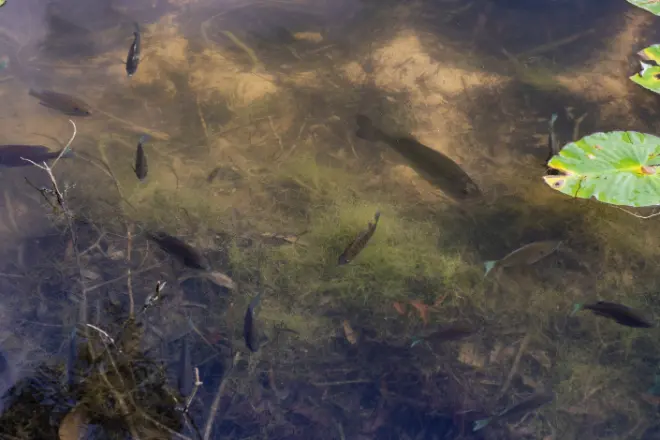
Creating a balanced and thriving ecosystem in your fish ponds involves a careful selection of fish and plants.
This will ensure your pond remains healthy and supports a diverse range of wildlife. Fish production in farm ponds serves both food purposes and recreational fishing, contributing significantly to local food systems and recreational resources.
Fish Stocking and Plant Stocking
Introducing the right fish and plants is essential for a balanced ecosystem.
Follow the link to view a list of common types of pond fishes in Kansas.
- Recommendations for a Balanced Ecosystem:
- Stock a variety of fish species to maintain ecological balance.
- Add aquatic plants to oxygenate the water and provide habitat.
- Types of Fish and Plants Suitable for Large Ponds:
- Fish Species:
- Green sunfish
- Bass
- Catfish
- Aquatic Plants:
- Water lilies
- Cattails
- Duckweed
- Fish Species:
Habitat Enhancement
Enhancing the pond’s habitat can attract more wildlife and improve the overall health of the ecosystem.
- Creating a Thriving Ecosystem:
- Add structures like logs and rocks to provide shelter for fish.
- Ensure there are shallow areas for amphibians and insects.
- Features to Enhance Wildlife Attraction:
- Install a pond fountain to aerate the water.
- Plant native vegetation around the pond to support local fauna.
By stocking your pond with a diverse range of fish and plants and enhancing the habitat, you’ll create a vibrant and sustainable ecosystem.
This approach not only beautifies your property but also promotes local biodiversity.
Discover more custom pond features for your acreage pond here.
Maintenance and Sustainability
Maintaining your pond is crucial for ensuring its long-term health and sustainability.
Regular care will help keep the water clear and the ecosystem balanced.
Regular Maintenance
Regular upkeep is essential for pond health and longevity.
- Tips for Maintaining Pond Health and Water Quality:
- Monitor Water Levels: Regularly check the water level to ensure the pond holds water properly.
- Muck Removal: When necessary (typically every 10-15 years), get your pond mucked out by a professional pond maintenance company. Note: Bulletproof Pond and Lake offers this service for a cost of $15-$20 per linear foot of shoreline.
- Algae Control: Use natural or chemical treatments to manage algae growth.
Sustainable Practices
Implementing eco-friendly practices ensures your pond remains a healthy part of the environment.
- Implementing Eco-Friendly Maintenance Strategies:
- Natural Filtration: Use plants like cattails and reeds to filter the water naturally.
- Sustainable Planting: Choose native aquatic plants that support the local ecosystem.
- Long-Term Sustainability Measures:
- Erosion Control: Use rocks (rip-rap) or vegetation to stabilize the pond banks and prevent erosion.
- Water Conservation: Install a rainwater catchment system to reduce dependency on external water sources.
By following these maintenance and sustainability practices, you can ensure your pond remains a beautiful and healthy feature of your property for years to come.
Costs and Considerations
Understanding the costs and considerations involved in building a pond will help you plan your budget effectively and make informed decisions.
Cost Breakdown
Constructing a pond involves several expenses.
Here’s a list of the biggest cost factors in large pond construction:
- Cost Factors:
- Excavation Costs: Renting excavation equipment or hiring a contractor.
- Materials: Costs for pond liners, clay, rocks for erosion control, and pond plants.
- Labor: Professional fees if hiring experts for pond construction.
- Permits: Budget for necessary permits, which can vary by location and project specifics.
Please follow the link to discover how much it costs to build a pond based on size and other factors.
DIY vs. Hiring a Contractor
Deciding between a DIY approach and hiring a professional can impact both immediate and long-term costs.
- Pros and Cons of Each Approach:
- DIY:
- Pros: Possible cost savings and personal satisfaction. Please follow the link to learn about DIY pond cost vs. hiring a contractor and why you likely won’t save money going the DIY route.
- Cons: Time-consuming, potential for mistakes, lack of expert advice.
- Hiring a Contractor:
- Pros: Expertise, efficiency, high-quality construction. The importance of professional pond excavation can not be overstated!
- Cons: Higher immediate costs.
- DIY:
- Immediate and Long-Term Costs:
- Immediate Costs: Equipment rental, materials, professional fees.
- Long-Term Costs: Maintenance, repairs, potential enhancements.
Evaluating these costs and considerations will help you decide the best approach for your pond project, ensuring it meets your budget and long-term needs.
Transform Your Property with Bulletproof Pond and Lake
By following this guide, you now have the knowledge to plan, design, construct, and maintain a large pond on your property, creating a beautiful and functional water feature.
You’ve learned the importance of site selection, soil testing, and the steps involved in pond construction, along with essential tips for stocking and maintaining your pond.
At Bulletproof Pond and Lake, we specialize in large pond building and can handle all aspects of your pond installation needs.
Our expertise ensures your project is completed efficiently and to the highest standards, providing you with a stunning, long-lasting pond.
Ready to bring your dream pond to life?
Fill out our contact form today, or give us a call.