
Key Points
- Build a 5-acre pond by hiring skilled operators with heavy machinery, and budgeting at least $120,000.
- Design the pond with 10–15 foot depths, engineered spillways, and features like islands or coves to enhance function and aesthetics.
- Ensure legal compliance by obtaining permits, completing soil analysis, and creating professional site plans for drainage and erosion control.
Making a Big Splash: Start Your Pond Journey the Smart Way
Ever looked across your land and pictured a private pond—wide, peaceful, and teeming with life?
Wondering what it really takes to turn that vision into a 5-acre reality in Kansas?
This guide walks you through every detail of installing a 5-acre pond—from choosing the perfect spot and securing the correct permits to understanding the true costs and ongoing maintenance involved.
By the end, you’ll know exactly what to expect, how to avoid costly missteps, and how to design an acreage pond installation that adds beauty and value to your property.
Ready to take the first step?
Reach out to the pros at Bulletproof Pond and Lake—just give us a call or fill out the contact form.
Let’s bring that dream pond to life!
What Does It Take to Build a 5-Acre Pond?
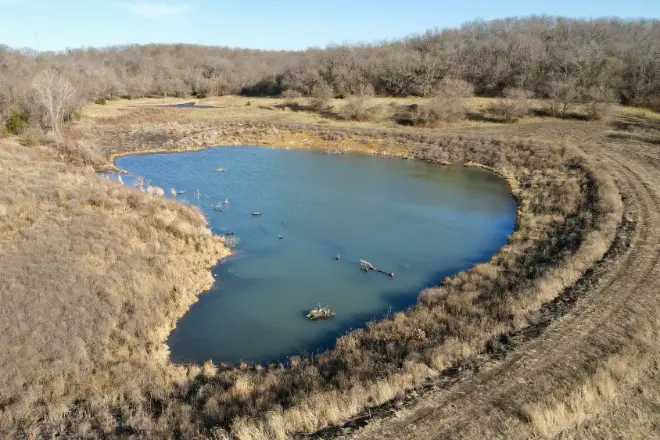
Building a 5-acre pond in Kansas—or anywhere in the Midwest—isn’t as simple as digging a hole and hoping for rain.
It requires a solid plan, the right equipment, and a clear understanding of the land, costs, and timeline involved.
Here’s what you need to know before breaking ground.
Land, Labor, and Budget: The Big Three
- Land requirements: A 5-acre pond typically needs at least 6–7 acres of usable space to allow for grading, embankments, and water runoff management. Flat terrain or gentle slopes work best.
- Labor and machinery: You’ll need heavy equipment like bulldozers, scrapers, and excavators—plus an experienced team to operate them. DIY approaches aren’t recommended at this scale.
- Budget range: Expect to invest at least $120,000, depending on soil conditions, design features, and excavation depth. Deeper ponds with complex shoreline structures or added features like islands or a dock will cost more.
Why a 5-Acre Pond Is Different from a Small Pond
- More than size: A small pond might rely on seasonal rainfall to fill and simple tools to dig. A 5-acre pond requires engineered spillways, sediment control, and drainage planning to manage water flow and prevent erosion.
- Fish population planning: Larger ponds can support a more diverse fish ecosystem, but they also demand better habitat design, including deeper zones for perch, cover for minnows, and even an aeration system to maintain water quality.
Planning and Timeline
- Prep time: From site evaluation to permits, expect several weeks of prep work before excavation begins.
- Build time: Excavation and basic pond construction typically takes 4–6 weeks under normal conditions, but longer if weather or rocky soil delays the process.
Before you start shaping the land, make sure your plan covers more than just the digging—because smart building starts with knowing what it truly takes to create a healthy, sustainable 5-acre pond.
Step 1: Choosing the Right Site
The location you choose will make or break your 5-acre pond.
A well-selected site helps reduce construction costs, improves long-term water retention, and sets the stage for a healthy fish habitat.
What Makes a Good Pond Site?
- Natural drainage patterns: Look for land where water already collects during rain. This minimizes how much water you’ll need to add artificially.
- Clay-rich soil: Clay is essential for holding water. If the soil is too sandy or rocky, you’ll need soil amendments or a synthetic liner to prevent leaks.
- Sunlight and wind: Full sun discourages weed growth and promotes healthier oxygen levels. Wind helps with natural aeration, which benefits fish and keeps the water clearer.
Terrain and Topography Considerations
- Gentle slopes are ideal: Sloped land helps direct runoff into your pond and reduces excavation work.
- Avoid floodplains and low spots: These areas may seem like natural pond sites, but they can introduce contaminants or flood your pond during heavy storms.
Step 2: Planning, Permits, and Legal Requirements
Before you start digging, it’s important to navigate the legal steps.
Every pond, especially one as large as 5 acres, must comply with local and federal regulations.
Do You Need a Permit to Build a Pond?
- Yes, in most cases. Depending on the size and your location in Kansas or nearby states, you may need a land disturbance permit or a water use permit. A professional pond contractor can help you with permits.
- Army Corps of Engineers involvement: If your pond affects wetlands or connects to a stream, you’ll need to involve the US Army Corps of Engineers. This can add time to your project, so plan ahead.
Understanding Local Regulations
- Check zoning restrictions: Some counties limit the size or location of ponds relative to property lines and homes.
- Comply with watershed rules: If your pond drains into nearby creeks or rivers, you may face additional runoff or erosion control requirements.
Working with Surveyors and Engineers
- Get a professional site analysis: This helps confirm soil type, drainage feasibility, and where to position your spillways and banks.
- Proper layout is critical: An engineered plan ensures your pond holds water and doesn’t cause erosion or flooding nearby.
Step 3: Designing Your 5-Acre Pond
The right design not only supports a thriving fish population—it also lowers long-term maintenance costs and helps you enjoy the pond year-round.
Depth, Shape, and Layout
- Depth matters: For fishing and water quality, include zones that are 10–15 feet deep. Shallower shelves around the edge support spawning and aquatic life.
- Shape options: While oval and kidney shapes are common, irregular edges add visual interest.
- Shoreline design: Use gentle slopes and compacted clay banks to reduce erosion. Adding ledges or steps gives fish cover and spawning areas.
Adding Islands, Peninsulas, and Coves
- Add function and beauty: Islands offer safe zones for fish away from predators. Peninsulas give you easy access for feeding or fishing. Follow the link to learn more about the benefits of building a peninsula or island.
- Cost factor: These features increase excavation complexity but can dramatically enhance the pond’s look and usability.
Step 4: Excavation and Construction Process
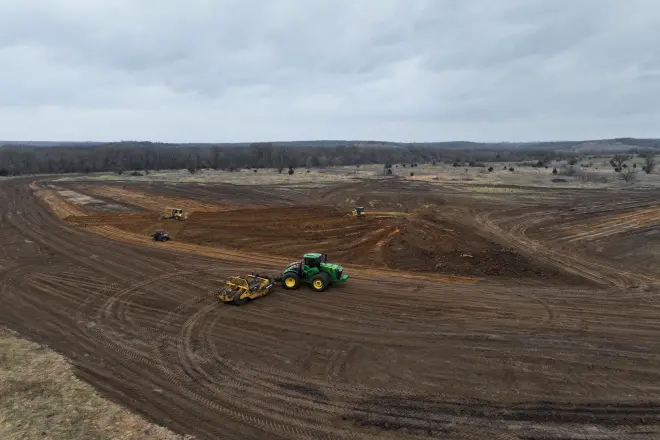
Excavation is where your pond finally starts to take shape—and it’s one of the most labor-intensive phases of the entire project.
For a 5-acre pond, it’s important to follow a structured process to ensure water retention, safety, and long-term success.
Timeline for Excavation
- Step-by-step process: Most 5-acre pond projects go through clearing, digging, grading, and compacting—each of which may take several days or weeks.
- Project duration: Depending on soil conditions and weather, excavation for a 5-acre pond typically takes 3 to 6 weeks.
Equipment and Labor Needs
- Heavy machinery is essential: Bulldozers, scrapers, excavators, and dump trucks are required to move tens of thousands of cubic yards of soil.
- Hire experienced pros: Skilled operators can shape the pond efficiently and avoid common mistakes like over-excavating or cutting through a clay layer. Follow the link to learn why professional pond excavation is so important.
Dealing with Unstable or Rocky Soil
- Assess early: Soil testing during planning helps spot rocky or unstable conditions that could interfere with construction.
- Soil conditioning: In Kansas, it’s not uncommon to bring in clay or compact layers to create a stable bottom and prevent leaks.
- Unexpected delays: Hitting large rocks or soft spots may extend the project timeline and raise costs—another reason expert help matters.
Step 5: Cost Breakdown and Budgeting
Understanding the full cost of building a 5-acre pond helps you avoid surprises and budget more accurately.
Excavation is just the beginning—there are also permits, design features, and long-term care to consider.
What Is the Average Cost to Build a 5-Acre Pond?
The average cost to build a 5-acre pond typically starts at $120,000, depending on the site, soil, and optional features.
This pricing reflects a full-service approach and includes everything needed to get your pond from concept to completion.
Here’s what that investment covers:
- Tailored phone consultation to discuss goals, expectations, and project scope
- Water runoff evaluation to ensure proper drainage and sustainable filling
- Soil borings and sampling, including soil particle testing to assess compaction needs
- Aerial Lidar survey for accurate elevation and terrain data
- Auto-CAD site plans that map out your pond’s layout, depth, and contours
- Earthen pond excavation customized to your land and water needs
- Overflow system installation to manage high water levels and prevent damage
- Typical timeline: The entire project is usually completed within 4 to 6 weeks
- Added costs: Features like islands, peninsulas, or a beach area can raise your total budget by thousands more.
This starting cost reflects a professionally engineered, expertly constructed pond—designed to last and built for performance.
Factors That Affect Cost
- Site complexity: Sloped land, tree removal, and rocky soil increase time and equipment costs.
- Access to utilities and roads: Remote locations may need road clearing or fuel surcharges to bring in machines.
- Water source proximity: If your pond won’t fill naturally from runoff, you may need to drill a well or install a pump.
Optional Features and Their Prices
- Docks and rock lining: Adding a dock, limestone shoreline, or beach area enhances usability and appearance but increases the total price. Follow the link to explore more custom pond features for your acreage pond.
- Aquatic plants and fish stocking: These extras support a healthy ecosystem and an attractive shoreline but come with additional costs.
Step 6: Water Management for Your Pond
After construction, the focus shifts to managing how water enters, flows through, and exits your pond.
Without the right systems in place, even a perfectly built pond can run into problems.
Natural Filling
- Rely on rain and runoff: Most 5-acre ponds in Kansas fill naturally from rainfall and watershed flow. Make sure the site has a large enough drainage area to support it.
- Wait for a full season: It can take a full year for your pond to fill up, depending on rainfall and runoff volume.
Spillways and Drainage Systems
- Emergency spillways are critical: These help manage overflow during heavy rain and prevent dam failure or shoreline erosion.
- Piping and drain structures: Install drains and overflow pipes to control water levels and allow for future maintenance.
Follow the link to learn more about the role of pond overflow systems.
Step 7: Stocking and Landscaping
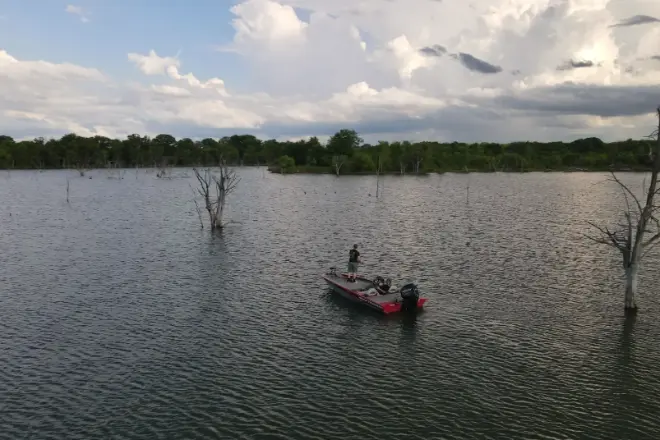
Once your pond is filled and stable, it’s time to turn it into a thriving aquatic ecosystem.
Proper stocking and shoreline landscaping are essential if you want to create a healthy, long-lasting environment that supports both wildlife and recreation.
Fish Stocking Best Practices
- Start with forage species: Begin by stocking minnows or other small baitfish. These provide food for larger game fish and help establish a natural food chain.
- Add predator fish later: Once forage populations are established, introduce species like largemouth bass, bluegill, or perch. These fish help control balance and prevent overpopulation.
- Mind the timing: Don’t rush to add too many fish early on. A phased approach gives bait fish time to multiply and mature, reducing stress on the ecosystem.
Aquatic Plants and Habitat Enhancement
- Provide natural cover: Rocks, logs, and shallow shelves give fish places to hide and spawn. These structures also protect young fish from predators.
- Encourage biodiversity: Adding aquatic plants like water lilies and submerged grasses improves oxygen levels, filters nutrients, and attracts frogs, birds, and insects.
- Habitat zones: Design areas of deep water, shallow shelves, and vegetated edges to support a wide range of species and improve water quality year-round.
Step 8: Long-Term Pond Maintenance
A 5-acre pond is a living system that needs routine care to stay healthy, functional, and visually appealing.
With proper maintenance planning, you can avoid costly damage and keep your pond enjoyable for decades.
Ongoing Maintenance Tasks
- Algae control and water treatments: Regular applications help manage algae blooms and keep water quality safe for fish and recreational use.
- Inspections: Seasonal checks of spillways, embankments, and shorelines catch small issues before they become big problems.
- Vegetation management: Keep invasive plants and shoreline overgrowth in check to prevent erosion and habitat imbalance.
Estimated Long-Term Maintenance Costs
- Targeted muck removal (every 15–25 years): Expect to pay $15–$20 per linear foot of shoreline to clean out localized buildup.
- Complete muck out (every 50–70 years): A full-scale cleanup can run approximately $100,000, depending on the cleaning tier (Deluxe or Premium).
Step 9: Enhancing the Experience
Beyond functionality, a 5-acre pond offers countless opportunities for fun, relaxation, and visual appeal.
With a few thoughtful additions, you can transform your pond into a favorite destination for the whole family.
Recreational Uses for a 5-Acre Pond
- Fishing, boating, and hunting: Stocking bass or bluegill gives you a chance to catch your own dinner. Flat banks or small docks make launching a kayak or paddleboat easy.
- Swimming and relaxing: Clear water and safe access points let you swim or simply sit by the shore and enjoy the view.
Visual Upgrades
- Landscaping: Plant native grasses, wildflowers, or shade trees around the pond to improve aesthetics and attract pollinators.
- Lighting and seating: Install solar lights along the edge and add benches or picnic spots to enjoy evenings by the water.
Ready to Build Your Dream Pond? Bulletproof Pond and Lake Has You Covered
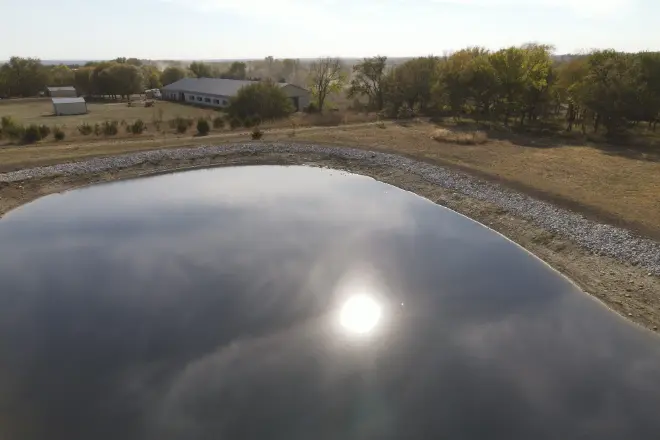
From picking the perfect site to budgeting for long-term maintenance, you now know exactly what it takes to build a successful 5-acre pond in Kansas and beyond.
With the right plan, you can create a functional, scenic water feature that supports fish, recreation, and property value for generations.
If you’re serious about bringing your vision to life, the pond contractors at Bulletproof Pond and Lake are ready to help.
From permitting to excavation to final stocking, they make acreage pond installation easy, efficient, and tailored to your land.