Dirt, Depth, and Doing It Right
Ever wonder why some ponds stay full and solid for decades while others start leaking almost right away?
Or why digging a pond sounds simple until it turns into a costly mess?
In this post, you will learn how the pond excavation process actually works, what happens at each stage, and why skipping steps is the fastest way to a failed pond.
By the end, you will understand what separates a long-lasting pond from one that needs constant repairs, so you can make smarter decisions before any dirt is moved.
If you are considering installing an acreage pond and want expert eyes on your land, reach out to Bulletproof Pond & Lake by calling or using the contact form.
What Is the Pond Excavation Process?
Professional pond excavation is a step-by-step construction process that determines whether a pond will hold water, support fish, and last for decades.
It goes far beyond the moment you begin digging and includes planning, soil tests, equipment selection, excavation, compaction, shaping, and erosion control.
When landowners dig a pond without following this process, they often run into water loss, unstable slopes, poor water quality, and costly mistakes that affect the entire pond.
At a high level, the pond excavation process includes:
- Site assessment and soil tests at the pond site
- Pond design and layout planning
- Securing proper permits and checking local regulations
- Using heavy machinery to excavate and remove soil
- Compacting soil and building clay seals so the pond can hold water
- Shaping slopes, depth zones, and dams within the pond basin
- Finishing work for erosion control, planting areas, and long-term maintenance
Each step builds on the one before it.
Skipping steps or rushing ahead is how small ponds turn into problem projects.
1. Site Evaluation and Soil Testing
Why Soil Determines Whether a Pond Will Hold Water
Before anyone digs a pond, the soil beneath the surface must be evaluated.
Soil quality determines whether water stays in the pond basin or leaks into the ground.
Clay-rich soil holds water well.
Sandy soil in river bottoms, gravel pockets common across the Plains, fractured rock in hill country, or silt-heavy layers left by historic flooding all allow water to escape.
Poor soil conditions are one of the most common reasons ponds fail.
Even a great pond design cannot overcome unsuitable soil without proper planning and materials.
What Soil Testing Evaluates
A thorough site assessment and soil tests focus on:
- Clay content and compaction potential
- Presence of sandy soil, gravel, or rock layers
- Depth of usable clay below the surface
- Overall soil types and soil quality across the site
- Suitability of the surrounding soil for sealing the entire pond
These tests guide decisions about excavation depth, clay placement, and whether supplemental materials are needed.
In many Midwest and Plains states, guidance from the Natural Resources Conservation Service (NRCS) is used to evaluate soil behavior, slope limits, and erosion risk on agricultural and rural land.
Why Skipping This Step Leads to Failure
Excavating without soil data often leads to common pitfalls such as:
- Chronic water loss and unstable water level
- Ongoing leaks that are hard to locate
- Additional costs for retrofits or rebuilds
- Costly mistakes that affect the entire pond footprint
Once excavation starts, fixing soil problems becomes far more expensive than addressing them upfront.
2. Pond Design and Layout Planning
Determining Pond Size, Shape, and Depth
Pond design starts with how the pond will be used.
A wildlife-habitat pond looks different from a fishing pond or a water-storage pond.
Design decisions consider:
- Fish production and long-term maintenance needs
- Wildlife and aquatic plants
- Water feature aesthetics and surface area
- How deep the pond needs to be to maintain water quality
Depth planning usually includes:
- Shallow water shelves for plants and wildlife
- Transitional slopes that reduce soil erosion
- Deep zones that stabilize temperature and support fish
Small ponds may have simpler layouts, but larger ponds require more detailed planning to avoid future issues.
Planning Slopes for Stability and Maintenance
Slope design is one of the most important parts of pond construction.
Proper slopes:
- Reduce soil erosion along the surface
- Make planting areas more stable
- Improve access for future maintenance
- Help the pond hold water evenly
Steep slopes collapse over time, especially in poor soil or areas with surface runoff.
Gentle, consistent slopes protect the pond and surrounding land.
Designing for Excavation Efficiency
Good planning reduces how much material must be moved and where excavated soil will go.
A clear layout helps:
- Guide where crews begin digging
- Reduce over-excavation
- Limit unnecessary remove soil steps
- Match the right equipment to each phase
Good planning saves time, reduces unexpected expenses, and keeps the project moving smoothly.
3. Permitting and Pre-Excavation Requirements
When Permits Affect the Excavation Process
Many ponds require a permitting process before excavation begins.
This is especially true for larger projects that affect drainage, surface runoff, or nearby water lines.
Permits may involve:
- Federal or state review
- Stormwater planning
- Drainage and erosion control plans
- Coordination with local regulations
These requirements directly influence when excavation can start and how the construction process is sequenced.
Why Permitting Must Happen Before Excavation
Starting excavation without proper permits can cause:
- Legal issues and project shutdowns
- Forced redesigns after digging begins
- Additional costs and long delays
- Problems when selling or maintaining the land
Securing necessary permits early prevents avoidable setbacks.
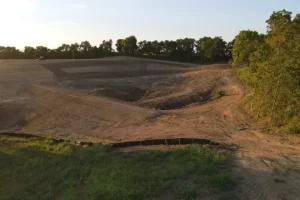
4. Large-Scale Pond Excavation and Grading
Excavation vs Digging
To dig a pond properly, excavation must be controlled and deliberate.
Excavation is not simply making a hole in the ground.
True excavation involves:
- Removing soil in planned layers
- Transporting excavated soil efficiently
- Shaping the pond basin as material is removed
- Preparing the surface for compaction
This approach ensures the entire pond performs as designed.
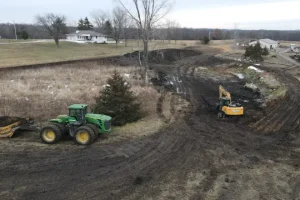
Equipment Used in the Pond Excavation Process
Large pond projects rely on heavy machinery, not hand tools.
Common equipment includes:
- Scrapers to move large volumes of soil
- Excavators for shaping slopes and depth
- Dozers for grading and compaction
- Support equipment to manage materials
Using the right equipment reduces time on site, improves compaction, and avoids costly mistakes.
Managing Excavated Material
Excavated soil is not waste. It is a critical building material.
Removed soil is often:
- Reused to build dams or embankments
- Shaped into flat areas around the pond
- Integrated into the landscape to control erosion
- Graded to manage surface runoff
Poor material management creates debris piles, unstable slopes, and long-term maintenance issues.
5. Soil Compaction and Water Retention Methods
Why Compaction Is Non-Negotiable
Soil that is not compacted properly allows air pockets to remain.
These pockets become leak paths once water fills the pond.
Proper compaction:
- Increases soil density
- Helps the pond hold water
- Stabilizes the ground under the entire pond
- Supports long-term water level control
Clay Sealing and Core Construction
Clay is the primary material used to seal ponds.
Effective clay sealing includes:
- Placing clay in thin layers
- Compacting each layer thoroughly
- Tying clay into suitable surrounding soil
- Creating continuous barriers beneath the pond basin and dam
Clay zones prevent seepage and protect the entire pond from slow leaks.
What Happens When This Step Is Rushed or Missed
Poor compaction leads to:
- Ongoing leaks
- Unstable water level
- Costly repairs or full reconstruction
- Increased maintenance needs
Fixing compaction problems after filling is one of the most expensive pond repairs.
6. Structural Shaping: Slopes, Depth Zones, and Dams
Creating Stable Side Slopes
Side slopes control how the pond interacts with water, plants, and wildlife.
Proper slope design:
- Reduces collapse and erosion
- Supports planting areas and aquatic plants
- Improves safety and access
- Protects the surface from wave action
Building Depth Zones That Support Water Quality
Depth variation helps maintain water quality across the entire pond.
Deep areas:
- Regulate temperature
- Support healthy fish populations
- Reduce excessive plant growth
- Improve long-term balance
Shallow water zones provide habitat for wildlife and plants while deep zones stabilize the pond ecosystem.
Dam and Embankment Construction
Dams are structural features, not piles of dirt.
Proper dam building requires:
- Layered soil placement
- Compaction at each lift
- Integration with the surrounding ground
- Protection against surface runoff and erosion
Poor dam construction is a major cause of pond failure.
7. Erosion Control and Finishing Work
Stabilizing Exposed Soil
Fresh excavation leaves soil exposed and vulnerable.
Early erosion control includes:
- Shaping slopes correctly
- Installing temporary protections
- Managing surface runoff
- Preventing silt and debris from entering the pond
Preparing the Pond for Filling
Before water enters the pond:
- Final grading is completed
- Structural checks are performed
- Water flow paths are verified
This ensures the pond fills evenly and safely.
Why Finishing Work Is Part of Excavation
Finishing work is not optional.
Poor finish work can undermine the entire project by:
- Allowing erosion to damage slopes
- Introducing debris and silt
- Increasing long-term maintenance costs
Long-term performance depends on how the excavation is closed out.
Why the Pond Excavation Process Is Not a DIY Project
Scale, Equipment, and Time Requirements
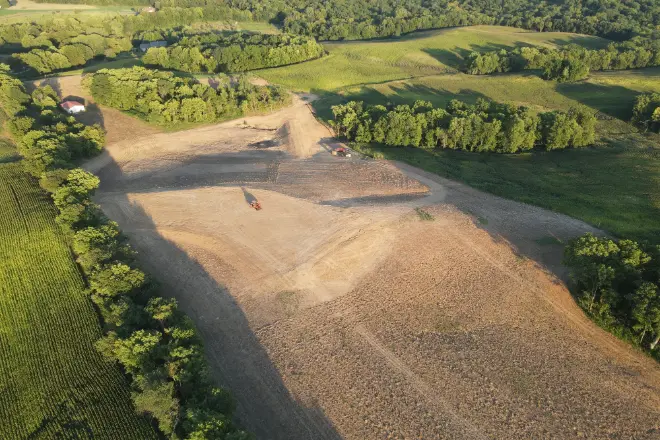
Large ponds involve:
- Tens of thousands of cubic yards of soil
- Specialized equipment
- Coordinated sequencing across the site
This scale makes DIY approaches risky and inefficient, even for landowners who are used to tackling big projects themselves.
The Cost of Mistakes vs Professional Execution
DIY attempts often lead to:
- Extended timelines
- Additional costs
- Structural failures
- Unexpected expenses tied to repairs
A professional pond builder understands how each step affects the next.
Why Process Matters More Than Effort
Successful ponds are built through good planning and correct sequencing.
Hard work alone does not fix:
- Poor soil
- Incorrect slopes
- Missing clay seals
- Improper compaction
Each step depends on the one before it being done right.
Why Landowners Trust Bulletproof Pond & Lake With Pond Excavation
You now know what it really takes to dig a pond that holds water, avoids common pitfalls, supports fish and wildlife, and lasts for decades instead of failing early.
Understanding the full excavation process helps you protect your land, your budget, and your long-term maintenance costs.
When it comes time to turn that knowledge into action, the pond builders at Bulletproof Pond & Lake have the equipment, experience, and process to handle pond excavation the right way from site assessment through final grading.
If you want a pond built to perform, not just look good on day one, we are equipped to take the project from dirt to durable.