
Digging Deep for Success: Building a Solid Pond Foundation
Have you ever wondered why some ponds maintain their beauty and fullness year-round while others seem to dry up with every change in the season?
Or why do some ponds become serene, wildlife-filled oases while others end up murky and maintenance-heavy?
A well-built pond relies on more than just a hole filled with water; it requires a strong foundation that prevents leaks and preserves water quality.
One of the most essential components of that foundation is the core trench.
In this post, you’ll learn what a core trench is, why it’s so crucial for pond stability, and the role it plays in building a reliable pond that holds up over time.
By understanding the role of core trenches, you’ll gain insights into the best practices for acreage pond installation that ensure long-term functionality and aesthetic appeal.
Read on to discover how a carefully constructed core trench can make the difference between a thriving, lasting pond and one that constantly demands attention.
What is a Core Trench, and Why is it Essential?
A well-built pond starts with a sturdy foundation, and the core trench is the heart of that foundation.
Also known as a keyway, this critical feature in dam construction is essential for creating a water-tight seal that prevents seepage and keeps your pond from drying up.
The core trench is particularly valuable in Kansas City, KS, where the region’s varied soil types, including sandy or rocky areas, can cause challenges with water retention.
Below, we’ll explore what a core trench is, how it helps ponds hold water, and why it’s essential for long-term pond success.
Understanding Core Trenches
A core trench is a specially excavated trench that runs along the length of a pond’s dam.
Filled with compacted clay or other non-porous materials, the trench forms a barrier against water seepage, which is critical for ponds constructed in areas with porous soil.
Here’s what makes core trenches effective:
- Barrier Creation: By digging down to a stable clay layer, the core trench forms a natural seal, blocking water from escaping through sandy or rocky soils.
- Leak Prevention: The trench essentially seals off pathways that would otherwise allow water to escape, keeping the pond’s water level consistent.
- Durable Foundation: Properly compacted clay provides a strong base for the dam, preventing future structural problems.
How Core Trenches Prevent Pond Leaks
For a pond to maintain its water level, it must prevent leakage through the dam or foundation.
Without a core trench, water can seep through loose soil, causing water loss and creating maintenance challenges.
Here’s why core trenches are effective in stopping leaks:
- Deep and Narrow Design: Core trenches are dug deep enough to reach stable soil, often 4 feet or more, and are compacted in layers. This depth ensures a solid base that’s resistant to leaks.
- Layered Compaction: Each layer of clay or other suitable material is carefully added and compacted. This compaction process strengthens the dam and creates a tighter seal.
- Adaptability to Soil Types: In areas where soil types vary, such as sandy or rocky soils, core trenches adapt by providing a water-retentive core that stops seepage at the source.
With a well-constructed core trench, pond owners can avoid costly issues like leaks and excessive water loss.
When built correctly, this foundation element ensures that your pond will hold water consistently, even during dry seasons, and reduces maintenance needs over time.
Key Elements for Building a Long-Lasting Pond Dam
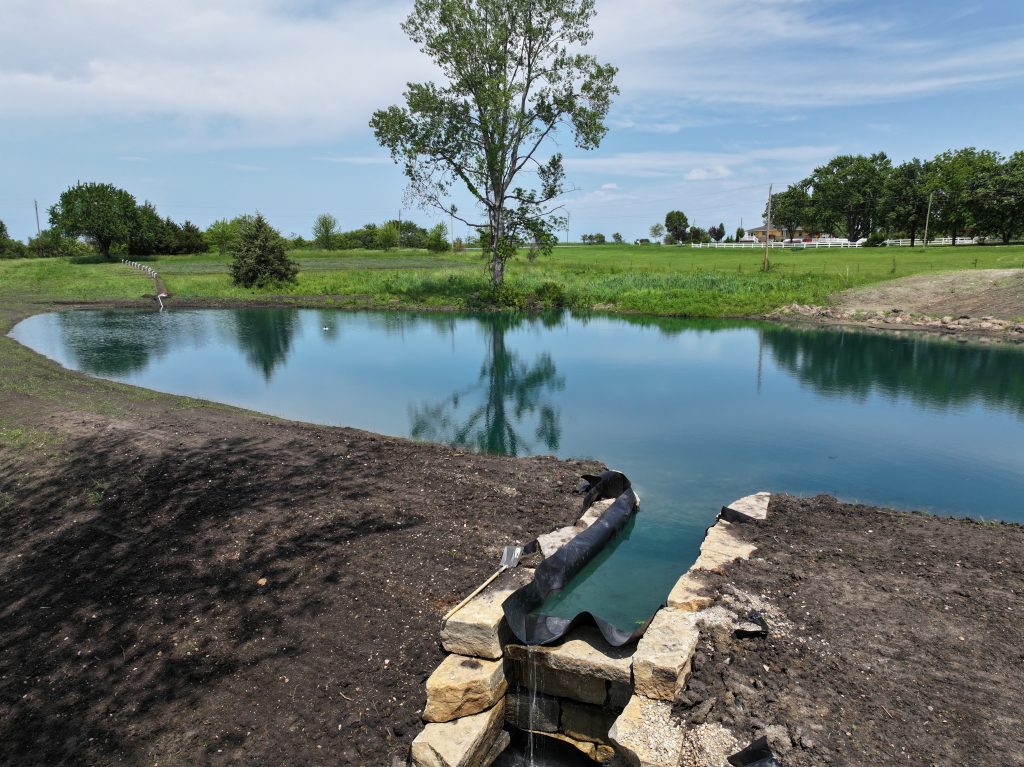
Constructing a durable pond dam requires careful planning and the right techniques to ensure the structure withstands natural elements over time.
From preparing the site to compacting the right materials, each step contributes to a stable dam that prevents erosion, holds water effectively, and supports vegetation growth.
Below are the essential components of dam construction that help keep your pond reliable and resilient.
Clearing Vegetation
A clean, stable surface is essential before digging begins.
By removing all existing vegetation from the construction area, you ensure the soil can bond tightly with new materials, minimizing future issues.
- Preparation: Clearing grass and roots prevents vegetation from interfering with the foundation.
- Bonding Strength: Clean soil allows the topsoil and other materials to bind tightly with the dam base, reducing the risk of shifting or leaks.
Stockpiling and Reapplying Topsoil
During excavation, it’s important to set aside topsoil so it can be used later.
This soil layer helps protect the dam by providing a surface for grass growth, which stabilizes the structure and guards against erosion.
- Stockpiling: Save the topsoil removed during the initial stages of construction.
- Reapplication: Once the core trench is compacted, spread the topsoil back over the dam to support Kansas native plant growth.
- Erosion Control: The topsoil layer helps grass take root, protecting the dam from rain and runoff. Follow the link for more tips on how to prevent soil erosion in pond construction.
Constructing the Core Trench
The core trench is the backbone of any pond dam and needs to be both deep and tightly compacted.
Digging this trench down to at least 4 feet is crucial, as it allows builders to reach stable soil or clay layers that hold water effectively.
- Excavation Depth: Dig down a minimum of 4 feet or until reaching a solid clay base to prevent water seepage.
- Layered Compaction: Add clay in layers and compact each layer to create a solid seal.
- Width and Shape: The trench should be wide enough to hold the dam’s structure in place and prevent water leakage, ensuring durability.
By following these steps for dam construction, a pond construction company in Kansas City, KS, can build a structure that will stand the test of time, holding water securely and keeping the area around the pond stable and healthy.
Material Selection: Choosing the Right Foundation Materials
Selecting the right material for a pond’s foundation is essential to ensure that it retains water and remains structurally sound.
In Kansas City, KS, choosing high-quality, non-porous materials for a pond’s core trench and dam can help avoid common problems like seepage, erosion, and water instability.
Below, we outline the most effective and long-lasting pond foundation materials and tackle common misconceptions about pond building.
Importance of Clay and Non-Porous Materials
Choosing non-porous materials, especially clay, is essential for a pond that will reliably hold water.
Unlike sand or loose soil, clay doesn’t allow water to seep through easily, making it a highly effective material for pond foundations.
- Clay as a Primary Material: Clay is compactable and creates a dense, water-tight barrier, essential for the core trench.
- Alternative Liners: In some cases, synthetic liners such as HDPE can provide additional water retention, especially if clay availability is limited.
- Compaction: Clay and other non-porous materials should be compacted in layers to maximize their sealing ability, reducing the risk of leaks.
Common Misconceptions in Pond Construction Materials
There’s a widespread belief that a pond is simply a dug hole that holds water naturally.
However, using unsuitable materials, like topsoil or sand, during the foundation construction process can lead to severe problems with water retention.
This is why you shouldn’t dig a pond yourself, especially if it’s a larger acreage pond.
- Topsoil is for the Surface, Not the Core: While topsoil is excellent for covering the pond’s surface to encourage grass growth, it is highly porous and should not be used as part of the core trench.
- Sand and Porous Soil: Sandy soil, though easy to work with, will quickly lose water. Always avoid using sand in any part of the pond dam or core trench.
- Layering and Compaction: Mixing materials without compacting in layers can create weak points in the dam, which increases the chance of leaks and structural issues.
By prioritizing clay and non-porous materials for the core trench and dam foundation, pond builders can create a lasting water feature that stands up to the challenges of water retention and erosion.
A carefully constructed pond foundation will lead to a low-maintenance and durable water source suitable for livestock, wildlife, or a scenic retreat.
Build Your Dream Pond with Bulletproof Pond and Lake
By understanding the critical role of a core trench and selecting the right materials, you’re now equipped with the knowledge to create a pond that holds water, resists leaks, and stands the test of time.
Each step—from clearing vegetation to compacting the right materials—contributes to a solid, long-lasting pond foundation.
With expertise in professional excavation, Bulletproof Pond and Lake have the skills and equipment to bring your pond vision to life.
We ensure that every core trench, dam, and spillway is constructed to maximize water retention and structural durability.
Ready to start building the perfect pond for your property?
Fill out our contact form today, or give us a call!