
Creating a Strong Pond Dam: The Foundation of a Lasting Water Feature
Are you thinking of building a pond that lasts and doesn’t drain away after every rainstorm?
Or curious about how some ponds seem perfectly designed to resist erosion and leaks?
Building a durable pond dam is key to ensuring your pond remains functional, beautiful, and long-lasting.
You’ll learn the best techniques for site preparation, material selection, and dam construction to help you create a water feature that’s both stable and visually appealing.
Whether for recreation, aesthetics, or functionality, installing an acreage pond with a solid dam will be well worth the effort.
The Importance of Proper Pond Dam Construction
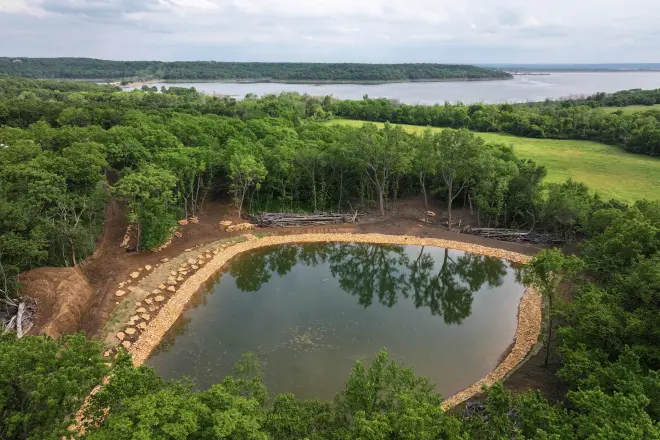
Building a pond dam properly is essential to prevent costly issues like leaks, erosion, and even complete dam failure.
Poorly constructed earth dams can allow water seepage, which undermines the dam’s integrity and causes ongoing maintenance headaches.
Using the right techniques and materials in dam construction helps ensure a long-lasting pond that maintains stable water levels and withstands seasonal challenges.
The Natural Resources Conservation Service (NRCS) is a valuable resource for guidance on pond construction, offering technical assistance in planning, design, and soil mapping.
Common Pitfalls of Dam Construction
Many pond owners make the mistake of rushing the dam construction process or using unsuitable materials.
Here are some common issues:
- Insufficient Core Trench: Without a compacted core trench of clay or other non-porous material, water can seep through the dam, leading to leaks and structural weaknesses. The core trench plays a critical role in pond dam construction.
- Improper Material Choice: Using soil with low clay content or failing to compact the soil properly can lead to erosion and reduce the dam’s ability to hold water.
- Lack of Spillway: A well-designed spillway is critical for handling excess water, especially during heavy rainfall events. Without an emergency spillway or principal spillway to manage overflow, the dam is at risk of breaching.
Benefits of Following Best Practices
By following proven techniques and using quality materials, pond owners can create a dam that will keep the water flow steady and support the pond’s ecosystem.
Proper construction not only ensures a stable water depth but also enhances the pond’s resilience against erosion and weather changes.
Case Study Example: Randy’s Recreational Pond in Perry, KS
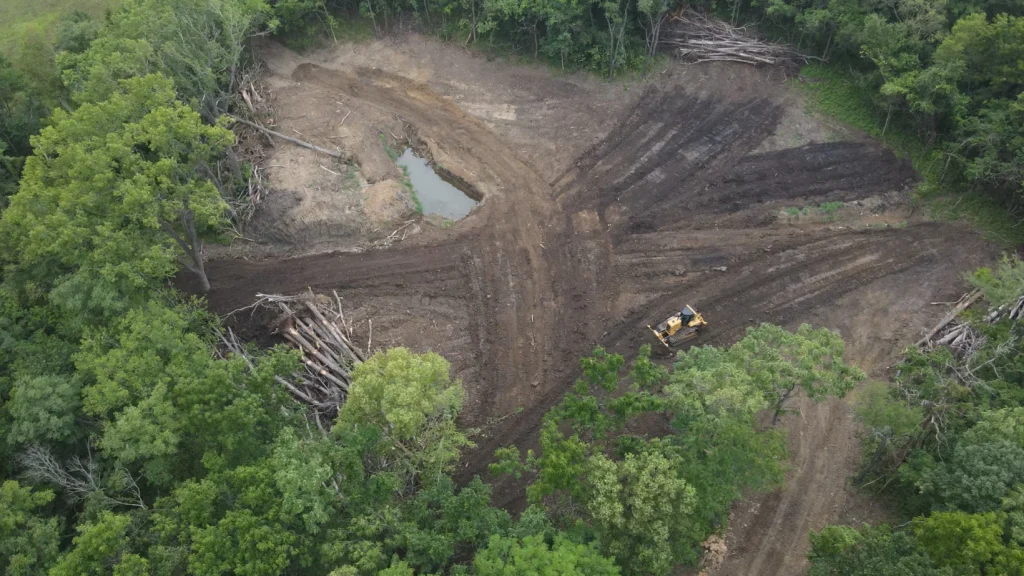
From Abandoned Farm Pond to Recreational Dream Pond
In Perry, KS, a pond originally constructed with an undersized dam that lacked a clay core posed stability issues and water seepage problems.
The pond’s narrow, weak structure allowed water to flow through the dam, leading to consistent water loss and soil erosion that compromised its strength.
Recognizing the need for a more stable and reliable foundation, the construction team decided to build a new dam in front of the old dam, reinforcing it with a proper core trench and widening the structure.
By incorporating a principal spillway (overflow pipe) into the design, the team addressed water management needs, ensuring the pond could handle heavy rainfall events without risking overflow or dam failure.
The result was a more secure dam that maintained consistent water levels and safeguarded the pond against erosion, providing Randy with a long-term, recreational water feature that would remain stable and beautiful for years to come.
Follow the link to view more details about Randy’s recreational pond in Perry, KS.
Solution Provided for Randy’s Recreational Pond
To address the issues in Randy’s recreational pond dam, the construction team implemented strategic measures that would reinforce the dam’s structure and enhance its water retention.
The team began by clearing overgrowth and removing excess trees around the site, allowing for a fresh start on a more stable foundation.
By widening the dam and incorporating a properly compacted core trench, they ensured the new dam would offer long-term durability.
Action Taken
In rebuilding Randy’s pond dam, the team used proven techniques to create a stable structure capable of withstanding heavy rainfall and other environmental stresses.
- Professional Excavation: Soil testing, careful site evaluation, and a professional pond excavation that removed a thick layer of top soil ensured the renovated pond would not leak like the old pond.
- Core Trench Construction: A deep, compacted core trench filled with high-quality clay was added to the center of the new dam, creating a water-tight barrier to prevent seepage.
- Widening the Dam: The new dam was much wider to add strength and better distribute water flow pressure, helping it remain stable over time.
- Spillway Installation: A principal spillway was installed to manage water levels and handle excess water during storms, protecting the dam from potential breaches.
By reinforcing the dam with these elements, the team successfully created a more resilient pond structure, helping Randy enjoy a safe, reliable pond for years to come.
Step-by-Step Pond Construction Process (Including Dam Building)
Building a reliable pond dam requires careful planning, precise execution, and high-quality materials to ensure water retention and structural stability.
Below is a breakdown of the essential steps in creating a pond dam that will hold water effectively and last over time.
1. Site Preparation
Preparing the dam site is crucial for ensuring a stable foundation and proper alignment with the surrounding landscape.
- Site Clearing: Remove any vegetation, topsoil, and debris to create a clean, stable surface for the dam. Clearing the area helps reduce the risk of interference from roots or organic material that can weaken the dam’s structure.
- Site Assessment: Evaluate the location’s natural water flow andsoil type to determine the dam’s best placement and dimensions. Understanding the basin area and flow patterns is essential for effective pond design. Bulletproof Pond and Lake used LiDAR drone equipment to perform a topographical assessment of the site, which was then used as the basis for an AutoCAD design plan.
2. Design and Material Selection
Designing the dam structure and selecting suitable materials are foundational steps that set the stage for a stable and durable dam.
- Dam Design: Plan the dam’s height, width, and slope to match the pond’s size and anticipated water storage capacity. The top of the dam should be at least twice as wide as it is tall for stability.
- Material Selection: Choose materials with high clay content to create a dense, water-tight core. Quality clay helps prevent water seepage, and compacted soil or gravel layers provide added stability and resilience.
3. Excavation and Core Trench Construction
The core trench is the central element of a pond dam, creating a sealed foundation that prevents leaks.
- Excavation: Excavate the core trench along the dam’s centerline, digging to a water-retentive clay layer or stable soil base. This trench will serve as the primary barrier against water loss.
- Core Trench Construction: Fill the trench with layers of compacted clay, ensuring each layer is tightly packed to eliminate voids. These compacted layers form a solid core that minimizes seepage and maintains consistent water levels.
4. Dam Construction
Building up the dam involves layering and compacting soil and clay to achieve a solid, erosion-resistant structure.
- Layering and Compaction: Begin constructing the dam by layering soil and clay over the core trench, compacting each layer as you go. This creates a firm, stable dam structure capable of withstanding heavy rainfall.
- Shaping the Dam: Shape the dam with a gentle slope on both sides. The side of the dam should be wide enough to distribute water pressure evenly and prevent erosion.
5. Final Touches
Adding finishing touches to the dam ensures it is equipped to handle water flow and resist erosion effectively.
- Overflow System Installation: Install a principal spillway and emergency spillway to control water levels and direct excess water away from the dam. These features help manage overflow during storms and protect the dam from breaching.
- Erosion Control: Apply erosion-resistant measures like planting vegetative cover or adding rock riprap along the dam’s slopes. These additions help stabilize the soil and reduce erosion from wind and water.
Following these steps ensures that your pond dam will maintain a steady water level and withstand environmental stress, providing a lasting and reliable water feature on your property.
The Outcome for Randy’s Recreational Pond

By following best practices for dam construction, Randy’s recreational pond in Perry, KS, transformed into a stable and water-retentive water feature.
The newly constructed earth dam was reinforced with a proper core trench and compacted layers of clay, creating a strong foundation that prevents leaks.
With the addition of a principal spillway to handle excess water from storms, the pond is now equipped to maintain consistent water levels and avoid overflow issues.
- Improved Water Retention: The reconstructed dam, built with compacted clay and a properly sealed core, prevents seepage, maintaining the pond’s water volume more effectively.
- Enhanced Durability: Widening the top of the new dam and adding erosion control measures protect against wear, ensuring long-term stability and reduced maintenance needs.
- Efficient Water Management: The newly installed spillway systems manage heavy rainfall, directing water flows safely and keeping the pond stable during wet seasons.
The completed project not only provided a beautiful recreational space for Randy and his family but also demonstrated the importance of a well-built dam in pond building.
Build Your Perfect Pond with Bulletproof Pond and Lake
A well-constructed pond dam is the backbone of a lasting and beautiful water feature.
From preventing leaks to managing overflow during heavy rains, a reliable dam ensures your pond remains stable and functional, enhancing your property for years to come.
Bulletproof Pond and Lake have the expertise to handle every detail of pond building, from core trench excavation to proper spillway installation, giving you peace of mind that your pond will retain water and resist erosion.
Our team prioritizes quality materials and proven construction methods to create a pond that meets your needs and complements your landscape.
Ready to turn your pond vision into a reality?
Fill out our contact form today, or give us a call!