
Key Points
- Keep pond water clear by reducing excess nutrients—limit fertilizer runoff, manage fish waste, and plant buffer zones with deep-rooted grasses.
- Maintain clarity with regular water testing, beneficial bacteria, and aquatic plants that boost oxygen and absorb nutrients before algae can grow.
- Stabilize shorelines, remove sediment every 15–25 years, and use seasonal maintenance to prevent algae blooms and long-term water quality issues.
Clear Intentions: Start Fresh With Crystal-Clear Acreage Pond Water
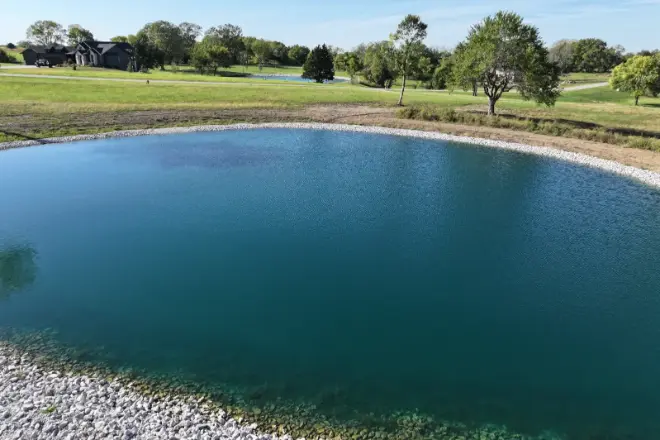
Is your pond starting to look more like pea soup than a peaceful retreat?
Are you tired of battling murky water, runaway weeds, or algae blooms that seem to return no matter what you do?
This guide is packed with practical advice on how to keep pond water clear in large acreage ponds—especially here in Kansas and nearby states where seasonal rains, runoff, and warm weather all pose real challenges.
From nutrient control and sediment management to shoreline stabilization and natural solutions, we’ll break down everything you need to know to reclaim your pond’s clarity and health.
By the time you finish reading, you’ll understand what’s causing the problem, how to fix it, and how to prevent it from coming back—all without relying on band-aid solutions or expensive equipment you don’t need.
And if you’re ready for expert acreage pond cleaning help, give Bulletproof Pond and Lake a call or fill out the contact form.
We’ll help you take the guesswork out of getting your water looking—and staying—clear.
Why Does Pond Water Get Murky?
Even in well-maintained large ponds, murky water is a common frustration for landowners in Kansas and surrounding states.
Understanding the root causes of cloudy or green water is the first step toward lasting clarity and a healthy pond ecosystem.
Common Causes of Cloudy Water
Murkiness in pond water usually comes down to three main issues—all of which feed off one another if not addressed early.
- Excess nutrients from lawn fertilizer, livestock runoff, or decomposing plant material can trigger aggressive algae growth, including blue-green algae or string algae.
- Sediment runoff after storms disturbs the pond bottom, especially in areas with steep banks or exposed soil, making water look muddy or brown.
- Too much fish waste and leftover fish food from overstocked ponds leads to imbalanced oxygen levels, nutrient spikes, and dirty water conditions.
Each of these issues feeds into the next, creating a cycle that degrades water quality and reduces clarity fast—especially in large ponds that lack regular monitoring.
The Impact on Pond Health
Murky pond water isn’t just an eyesore—it’s a warning sign that your pond’s ecosystem is out of balance.
- Low dissolved oxygen levels harm fish and reduce the natural breakdown of organic material.
- Too many fish or a lack of underwater plants can create oxygen stress and prevent beneficial bacteria from keeping things stable.
- Rapid algae growth blocks sunlight from reaching submerged plants, disrupting the balance between oxygen production and decay.
- Poor clarity reduces enjoyment, lowers property value, and often leads to emergency cleanup costs if left unchecked.
Clear water isn’t just about appearance—it’s critical to maintaining a thriving, balanced ecosystem that supports fish, aquatic plants, and your long-term goals for the pond.
Essential Steps for Clear Pond Water
Keeping pond water clear in large acreage ponds starts with proactive maintenance.
Testing, shoreline care, and managing what goes into the water are critical to building a healthy pond that supports fish, aquatic plants, and good water quality.
Regular Water Testing
Routine testing is one of the simplest and most effective ways to avoid murky or green water.
- Test monthly during spring and summer, when algae and nutrient levels rise.
- Quarterly testing is fine for cooler months, unless you notice issues.
- Always check after heavy rain, feeding increases, or signs of string algae.
Here’s what to watch:
- pH: Keep it between 6.5 and 8.5 for balanced oxygen levels and plant health.
- Dissolved oxygen: Low oxygen harms fish and slows the breakdown of fish waste and organic debris.
- Nutrients: Test nitrogen and phosphorus—excess nutrients are a leading cause of algae problems in Kansas ponds.
Testing helps pond owners spot early signs of trouble before it turns into full-on bloom or muck buildup.
Nutrient Control and Algae Prevention
If you want to know how to keep pond water clear in the long term, start by reducing the things that cause trouble in the first place.
- Create buffer zones: Plant deep-rooted grasses and oxygenating plants around the edge to absorb runoff and trap sediment.
- Keep livestock away: Trampling near shorelines leads to erosion and too much fish waste.
- Cut back on fertilizers: Avoid applying lawn chemicals within 100 feet of your pond or runoff areas.
- Limit fish feeding: Uneaten fish food adds more nutrients to the water than most realize.
In some cases, adding beneficial bacteria or barley straw can help break down organic material before it causes murky water or string algae.
Follow the link to understand the different types of algae that can invade your pond or lake.
But none of these solutions work without first addressing the sources of nutrients entering your pond.
Stay ahead of the game, and you’ll not only avoid algae—your pond water will stay clearer, your fish healthier, and your maintenance needs lower.
Physical and Mechanical Strategies
There are other tried-and-true ways to tackle murky water in large-acreage ponds.
These hands-on approaches help reduce muck, prevent runoff, and protect your pond’s structure over time.
Sediment and Muck Management
Over time, fish waste, decaying plants, and runoff settle into sludge at the bottom of your pond.
Without management, this organic debris can lead to cloudy pond water, oxygen loss, and increased algae.
- Routine muck removal every 15–25 years helps preserve depth and reduce excess nutrients.
- Schedule full dredging every 50–70 years, especially for older or heavily-used ponds.
- Use hydro-raking to target shallow areas with compacted buildup without disturbing the whole pond.
- Consider natural alternatives like beneficial bacteria treatments that slowly break down organic material and maintain better water quality.
If your pond has started to fill in faster than expected, it could be a sign of too much fish waste, poor feeding practices, or erosion from unprotected soil.
Shoreline Stabilization
A strong shoreline protects your pond’s ecosystem from runoff, erosion, and nutrient spikes—all of which make it harder to keep the water clean and clear.
- Line edges with native aquatic plants to anchor soil and slow surface water runoff.
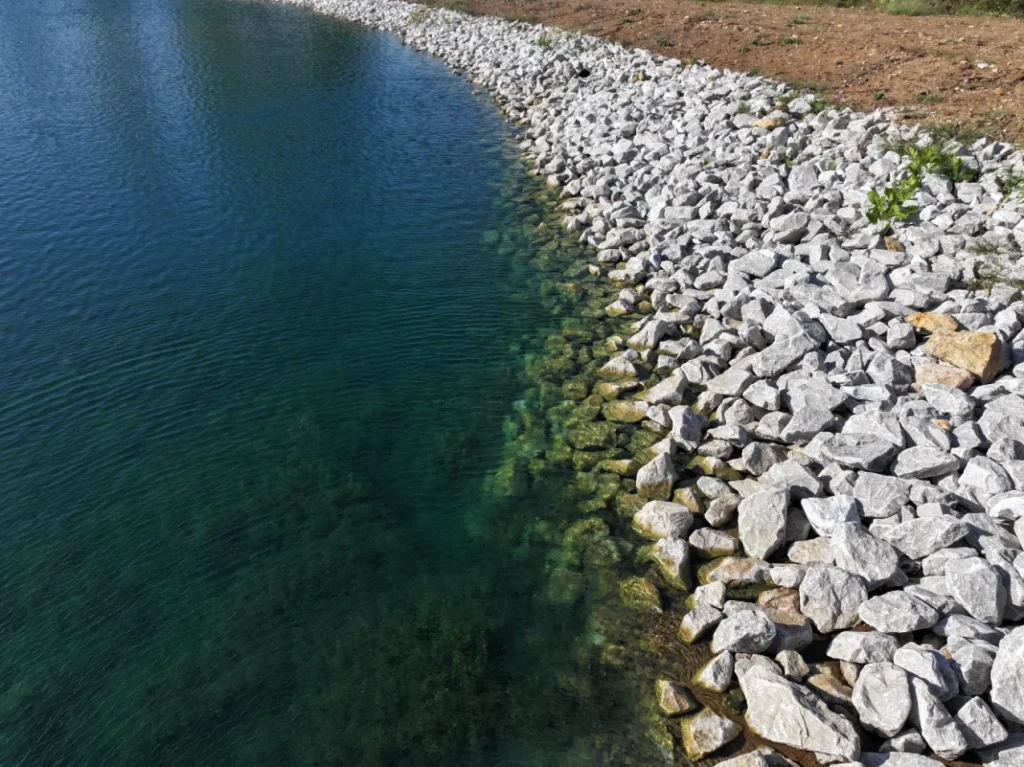
- Add riprap or stone barriers to minimize wave erosion in wind-prone areas.
- Maintain gentle slopes—steep banks erode faster and increase sediment loads.
- Keep livestock, mowers, and heavy equipment off the water’s edge to avoid trampling and soil disturbance.
Stabilizing your shoreline isn’t just about curb appeal—it’s a key defense against long-term water quality issues.
Follow the link for more strategies on how to prevent soil erosion in pond construction.
Natural Solutions for Water Clarity
Let nature do the heavy lifting.
Strategically using aquatic plants and balanced ecosystems can greatly reduce your need for treatments while supporting a healthy pond.
Beneficial Aquatic Plants
Plants play a big role in oxygenation, sediment control, and algae prevention.
- Submerged water plants like hornwort and oxygenating plants boost oxygen levels and absorb excess nutrients before algae can use them.
- Surface aquatic plants, such as water lilies, shade the pond’s surface, reducing sunlight and slowing string algae growth.
- Avoid overgrowth—too many plants can decompose and contribute to fish waste buildup if not managed.
If you’re wondering how to keep pond water clear, this is one of the most natural and effective ways to do it.
Biological Controls
Not all pond cleaning comes from tools—sometimes it comes from fish.
- Grass carp (where legal) can help control unwanted plant growth without chemicals. Follow the link to view the invasive carp species to avoid in Kansas.
- A healthy predator-prey balance keeps the food chain stable and minimizes overpopulation and feeding stress.
- Don’t overstock your pond—too many fish means too much fish waste, which disrupts the pond’s ecosystem and fuels algae.
Maintaining a balanced system of aquatic plants, oxygen, and fish helps prevent many of the common issues Kansas pond owners face each season.
Seasonal Pond Maintenance
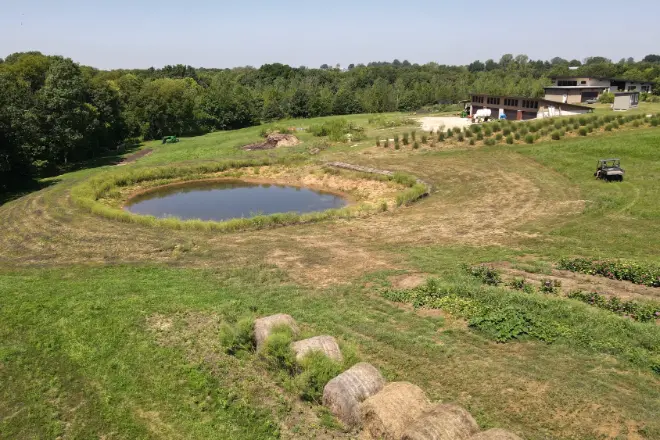
Seasonal shifts across Kansas and neighboring states bring unique challenges to maintaining clear pond water.
Adjusting your care routine throughout the year helps you stay ahead of algae and organic material buildup.
Spring and Summer
Warmer months bring longer days—and more algae growth.
Stay proactive:
- Inspect your pond water every few weeks for signs of cloudiness, string algae, or floating debris.
- Remove debris early before it decomposes and adds excess nutrients.
- Begin routine feeding for fish, but avoid overfeeding—excess fish food leads to more fish waste and cloudy water.
- Add beneficial bacteria to jumpstart the breakdown of organic material after winter dormancy.
The goal during spring and summer is prevention—stopping problems before they start.
Fall and Winter
Cold months offer a chance to clean up and prepare for spring.
- Skim leaves and plant matter before they sink and rot.
- Reduce feeding as water temperatures drop; fish metabolism slows in cold weather.
- Check for signs of algae or sludge buildup and spot-treat with barley straw or bacteria as needed.
- Use this time to assess sediment depth and plan for dredging or maintenance if your pond is aging.
Follow the link for more seasonal pond service maintenance tips.
When to Use Treatments
Natural strategies come first, but sometimes pond owners need extra help.
Treatments can clear cloudy water—but only when used carefully and with purpose.
Natural Clarifiers and Flocculants
If algae and particles cloud your pond water, natural additives may help.
- Barley straw breaks down slowly to inhibit algae growth—it’s safe and long-lasting.
- Use beneficial bacteria to digest organic material and improve water quality.
- Natural flocculants work by clumping fine particles, helping them sink for easier removal.
These options are best applied in early spring or mid-summer when algae is most active.
Herbicides (Last Resort)
Sometimes, conditions call for targeted chemical control.
- Use EPA-approved herbicides only as a last resort, and always follow label instructions.
- Never treat your pond like a swimming pool—chemical overuse harms fish, plants, and your pond’s ecosystem.
- Work with professionals to ensure safe application, especially if dealing with invasive plants or dense growth.
Always pair treatments with long-term nutrient control for lasting results.
Designing a Pond for Long-Term Clarity
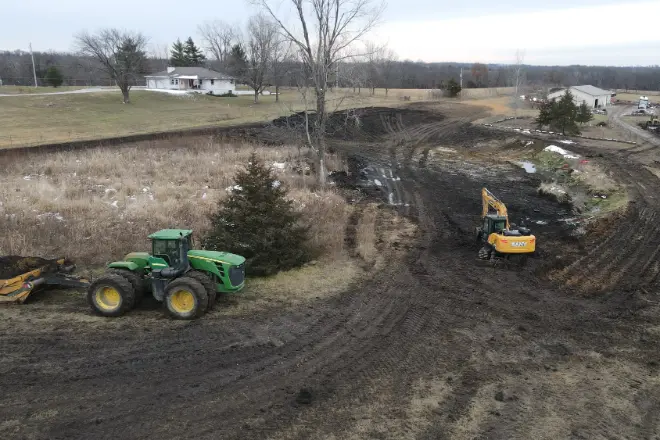
The way your pond is built influences how easy it is to maintain.
Smart design choices up front lead to clear water down the line.
Key Construction Features
- Plan for water movement: Natural water flow through inflow and outflow points keeps things circulating.
- Add settling basins or forebays to trap debris before it reaches the main pond.
- Grade surrounding land to reduce runoff and erosion, especially in areas with loose soil.
A well-designed pond helps limit nutrient buildup and protects your investment long term.
FAQs About Keeping Pond Water Clear
What can I put in my pond to keep the water clear?
Try adding beneficial bacteria, barley straw, or native aquatic plants to improve your water quality naturally.
Limit fish food and avoid overstocking to reduce fish waste.
How do I stop my pond water from going green?
Control algae by reducing nutrients.
Avoid too many fish, install vegetative buffers, and avoid overfeeding.
A pond filter won’t help in large acreage ponds, but nature-based methods work wonders.
How do I clear cloudy water in my pond naturally?
Use natural flocculants, boost bacterial activity, and remove organic material like leaves and decomposing plants.
Make sure your pond has enough plants to balance nutrients.
Ready for Crystal Clear Results? Let Bulletproof Pond and Lake Help
From algae control to seasonal care, you’ve now got the tools to manage water clarity in even the largest acreage ponds.
With the right combination of natural strategies, ongoing maintenance, and smart design, murky water doesn’t stand a chance.
If you’re ready to take things further, the pond contractors at Bulletproof Pond and Lake offer professional-grade pond cleaning and water quality services tailored to your land.
Reach out today to get expert help maintaining a healthy, beautiful pond all year long.