Leaks, Slopes, and Second Chances: Fixing Your Pond the Right Way
Is your pond losing water faster than it should, or showing signs of erosion around the dam or shoreline?
Have you tried quick fixes only to watch the same problems come back season after season?
In this post, you’ll learn exactly how the Bulletproof pond repair process works, step by step, from diagnosing leaks to rebuilding damaged areas the right way.
By the end, you’ll understand what actually stops pond leaks and erosion long-term so you can protect your water, your land, and your investment with confidence.
If you suspect your pond needs professional repair, reach out to Bulletproof Pond and Lake by calling or filling out the contact form.
We’re happy to take a look and help you figure out the smartest next step.
Pond Repair Process
The pond repair process follows seven structured steps designed to permanently stop leaks and erosion.
This repair process focuses on finding the real cause of water loss, correcting failed soil conditions, and rebuilding critical areas so the pond holds water long-term instead of relying on short-term fixes.
- Diagnose the source of pond leaks and erosion
- Lower or drain the pond as required
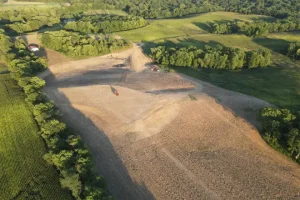
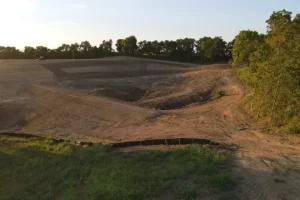
- Remove vegetation, muck, and failed soils
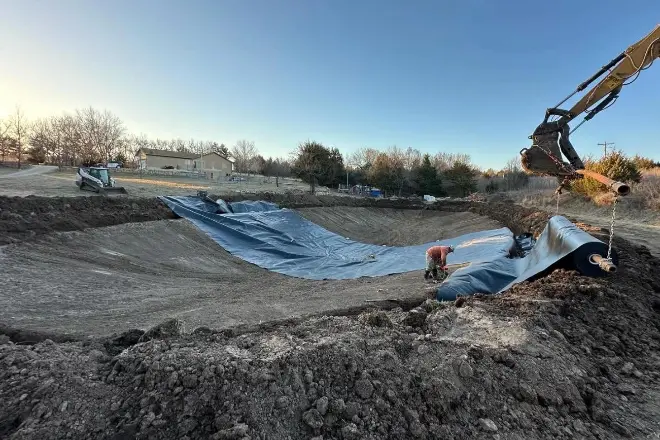
- Rebuild the pond dam and sealing layers
- Repair erosion and regrade slopes
- Restore spillways and manage overflow
- Stabilize, seed, and protect repaired areas
This pond repair approach is designed for large ponds, acreage ponds, and water features where structural issues, porous soil, or liner damage cause repeated problems.
Step 1: Diagnosing Pond Leaks and Erosion Damage
Before any pond leak repair begins, the first priority is understanding why the pond is losing water.
Many pond owners across the Plains and southern states assume evaporation during hot summers is the problem, but the reason why your pond or lake is leaking often comes down to deeper structural issues that show up after droughts or sudden rain events.
What Is Evaluated During Pond Diagnosis
A proper inspection looks at the entire pond, not just the visible leaking area.
- Dam condition, wet spots, and seepage indicators
- Water level changes compared to normal evaporation
- Erosion channels along the pond perimeter and slopes
- Soil composition, compaction quality, and moisture retention
- Drainage patterns and runoff behavior after rainfall
This step helps determine whether the issue is a leaking pond liner, porous soil, internal erosion, or multiple failure points working together.
Step 2: Lowering or Draining the Pond
Once the source of the problem is identified, the next step is deciding how much water must be removed.
In many cases, it is necessary to drain the pond to access the pond bottom, dam structure, or liner system safely.
When Draining Is Required
Draining is essential when repairs involve structural components.
- Structural dam leaks or internal erosion
- Clay liner or core trench failure
- Severe pond liner leaks affecting the entire surface
In these cases, the pond must be drained fully so repairs can be completed correctly and safely.
When Partial Drawdown Is Sufficient
Some repairs can be completed with a controlled drawdown instead of draining the entire pond.
- Localized erosion along the shoreline
- Small problem areas near the pond perimeter
- Repairs limited to surface slopes
A partial drain can be more cost-effective and less time-consuming when structural integrity is not compromised.
Step 3: Removing Vegetation, Muck, and Failed Soils
Successful pond repair depends on removing anything that prevents proper compaction or sealing.
Simply compacting over failed material almost guarantees future leaks.
Why Organic Material Must Be Removed
Vegetation and organic debris weaken the repair process.
- Tree roots create pathways for leaks and cracks
- Muck prevents soil from bonding and compacting
- Overgrown plants accelerate erosion and water loss
Leaving these materials in place allows moisture to move through the soil and reopen leaks.
Materials Removed During This Step
- Trees, brush, and root systems
- Muck and silt from the pond bottom
- Failed dam soils and unstable dirt
This step creates a clean base so clay, soil, or a new liner can properly seal the pond.
Step 4: Rebuilding the Pond Dam and Sealing the Basin
This is the core of the pond dam rebuild process and what separates permanent pond repair from repeated patch jobs.
Dam Reconstruction
When the dam is involved, repairs often include:
- Excavation of failed dam sections
- Rebuilding with moisture-conditioned clay
- Layered compaction to eliminate air pockets
Proper compaction is crucial to prevent water from traveling through cracks or porous soil.
Core Trench Installation or Repair
A core trench forms the primary water seal inside the dam.
- Excavated down to stable clay or existing soil with holding capacity
- Compacted in controlled lifts
- Prevents water from escaping beneath the dam
In some cases, bentonite clay may be blended into the soil to improve sealing performance, but it is never a substitute for proper construction.
Step 5: Repairing Erosion and Regrading Slopes
Soil erosion is both a cause and a result of pond leaks, which is why repairing slopes is essential to long-term pond stability.
Slope and Bank Corrections
- Regrading slopes to stable ratios
- Eliminating undercut banks and soft edges
- Rebuilding eroded transitions near rocks or gravel zones
Stable slopes reduce surface erosion and protect the pond’s beauty.
Runoff Control
Managing surface water reduces future problems.
- Redirecting surface water into the pond instead of around it
- Preventing bypass flow that undermines repairs
- Reducing erosion pressure during heavy rain
This step helps prevent future leaks and protects the entire pond structure.
Step 6: Restoring Spillways and Overflow Protection
Overflow systems protect the pond during extreme weather and high water events, such as prolonged spring rains or sudden downpours common across Kansas, Missouri, and Oklahoma.
Why Spillways Matter in Pond Repair
- Prevent overtopping during heavy rain
- Protect the dam from erosion
- Maintain a safe and consistent water level
Without proper spillway protection, even a well-built pond can fail.
Spillway Repair Work
- Regrading spillway channels
- Reinforcing high-flow areas with rocks or structural material
- Correcting elevations so water flows away safely
Step 7: Stabilizing, Seeding, and Protecting Repaired Areas
The final step ensures repairs last for decades, not just a season.
Final Grading and Soil Protection
- Topsoil replacement where needed
- Final shaping of the surface
- Smoothing the entire surface to shed water properly
Seeding and Establishment
- Grass seeding to stabilize soil
- Temporary erosion control while plants establish
- Allowing repaired areas to dry completely before refill
This step protects repaired areas from moisture damage and helps the pond blend back into the surrounding outdoor space.
Why Temporary Pond Leak Fixes Fail
Quick fixes often look appealing, but they rarely solve the real problem.
Limitations of Spot Treatments
- Patch repairs fail when leaks migrate
- Pond liner leaks often reopen under pressure
- Short-term fixes increase total repair cost later
A quick spot repair may hold for a few minutes or a season, but it does not stop water loss in large ponds.
Structural Repair vs. Band-Aid Fixes
- Structural repair resolves the root cause
- Proper sealing prevents future leaks
- A complete repair process restores long-term stability
This is why working with an experienced pond contractor matters.
Pond Repair Timelines and Project Scope
Pond repair timelines vary depending on size, damage, and weather conditions.
Typical Pond Repair Timelines
| Repair Type | Estimated Timeline |
|---|---|
| Minor structural repairs | Several days to weeks |
| Full dam rebuild or renovation | Multiple weeks |
Rain, moisture conditions, and access all affect how quickly work can be completed.
Why Pond Repair Is a Process, Not a Single Step
- Each phase builds on the previous one
- Skipping steps leads to repeated failures
- Proper sequencing protects the pond and its life
A well-executed pond repair protects fish, supports aquatic plants, and preserves the function of backyard water features for years to come.
Ready to Stop Pond Problems for Good? Bulletproof Pond and Lake Have the Fix
You now know how the pond repair process works, why leaks and erosion happen, and what it actually takes to fix them correctly, so water loss, cracking, and slope failures do not come back.
That knowledge helps you avoid quick fixes, wasted money, and repairs that fail after the first heavy rain.
When it is time to move from learning to action, Bulletproof Pond and Lake has the experience, equipment, and repair process needed to handle complex pond and lake repairs from start to finish.
If your pond is losing water, eroding, or failing structurally, our pond repair experts can diagnose the problem and rebuild it the right way.