The Calm and the Storm: A Tale of Two Ponds
Ever wondered why some ponds stay full year-round while others only appear after a heavy rain?
Curious which type actually protects your property and your budget when the storms roll in?
In this post, you’ll learn the key differences between retention and detention ponds, how each manages stormwater, and which works best for your property’s needs.
By the end, you’ll understand how choosing the right system can improve water quality, reduce flooding, and make your land more resilient.
If you’re planning a new pond or updating your stormwater system, reach out to Bulletproof Pond and Lake.
Call us or fill out the contact form today, and let’s design a pond that keeps your property safe and beautiful through every season.
Retention Pond vs. Detention Pond: What’s the Difference?
Both types of ponds are designed for managing stormwater runoff, but they work in different ways.
- Retention ponds (wet ponds): These hold a permanent pool of water throughout the year, and like any water feature, their performance depends on proper construction materials and design, as explained in our guide on the foundations of long-lasting ponds.
- Detention ponds (dry ponds): These temporarily store runoff after rainfall and release it gradually through an outlet structure. They are typically dry between storms and focus on flood control and erosion prevention.
The main difference lies in how long the water is stored.
Retention ponds keep water at a steady level, while detention ponds store it only for a short time before releasing it downstream.
How Stormwater Ponds Work
The Purpose of Stormwater Management
In the Great Plains and southern states, where heavy spring rains and summer storms are common, stormwater ponds are an essential part of modern development.
They help:
- Reduce flooding and erosion caused by heavy rainfall and surface runoff.
- Prevent pollutants and sediments from entering nearby waterways.
- Control both the quantity and quality of discharged stormwater to protect downstream ecosystems.
Without these basins, uncontrolled runoff can overwhelm drainage systems and damage land and infrastructure.
The Role of Stormwater Basins in Urban Areas
As cities from Kansas City to Dallas continue expanding, impervious surfaces like highways, rooftops, and massive parking lots prevent stormwater from soaking into the ground.
Stormwater basins capture this excess runoff, allowing it to slowly drain or infiltrate back into the soil.
Properly designed basins protect communities from flooding, improve water quality, and enhance the appearance of developments ranging from Missouri’s suburban neighborhoods to Oklahoma’s growing commercial and industrial areas.
What Is a Detention Pond?
How It Works
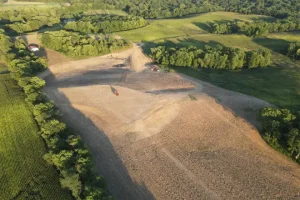
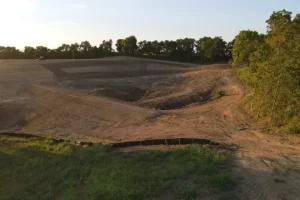
A detention pond, also known as a dry pond or detention basin, is built to temporarily store stormwater runoff after a rain event.
The stored water is released slowly through an outlet structure, helping to prevent flooding downstream.
Once the rainwater drains, the pond floor dries out within 24 to 48 hours.
Many are grass-lined or vegetated to promote infiltration and reduce erosion along the basin floor, following best practices similar to those covered in our article on how to prevent soil erosion in pond construction.
Primary Benefits
- Controls peak stormwater flow and reduces downstream flooding.
- Captures coarse sediment and debris, preventing them from reaching nearby streams.
- Provides open space that can serve as recreational land when dry.
Limitations
- Only provides limited improvement to water quality since water doesn’t remain long enough for pollutants to settle.
- Requires regular mowing, debris removal, and outlet inspection to maintain function.
- Offers less visual appeal compared to a permanent pond or wet basin.
What Is a Retention Pond?
How It Works
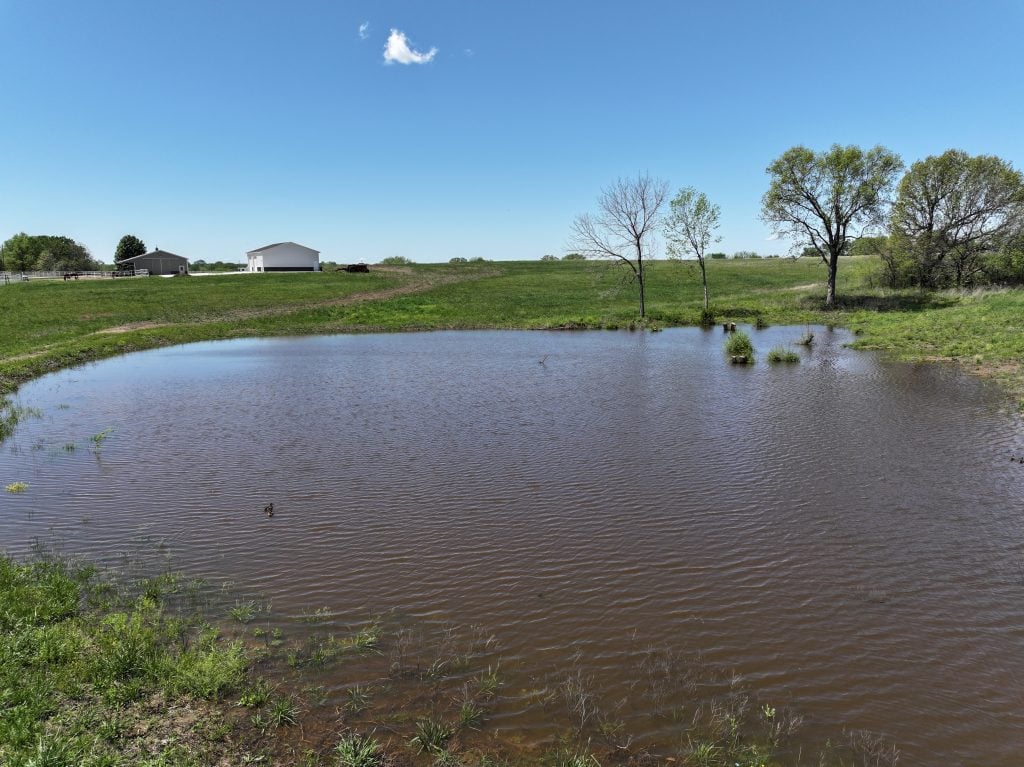
A retention pond, sometimes called a retention basin or wet pond, maintains a permanent pool of water that rises temporarily during storms.
As new runoff enters the pond, it displaces older water, which exits through a controlled outlet.
This process allows sediment and pollutants to settle at the bottom, which helps improve water quality over time.
Primary Benefits
- Provides long-term water-quality treatment by filtering out nutrients, sediments, and contaminants.
- Supports aquatic plants and wildlife, creating a balanced ecosystem.
- Enhances property value and visual appeal for nearby developments.
- Manages both stormwater quantity and quality effectively.
Limitations
- Requires ongoing maintenance, such as sediment dredging, vegetation trimming, and algae control.
- May need fencing or safety benches if located near populated areas.
- Typically costs more to install and maintain than a detention pond.
Key Differences Between Retention and Detention Ponds
| Feature | Detention Pond | Retention Pond |
|---|---|---|
| Water Presence | Temporary (dry between storms) | Permanent (wet year-round) |
| Primary Purpose | Flood control | Water-quality improvement |
| Water Storage | Short-term temporary storage | Long-term permanent pool |
| Maintenance Level | Low to moderate | Moderate to high |
| Ecological Value | Minimal | High (supports aquatic life) |
| Aesthetic Appeal | Functional | Natural-looking and scenic |
| Pollutant Removal | Limited | Significant |
Both pond types are crucial for controlling flooding and protecting the environment.
The choice depends on whether your site prioritizes water retention for quality or temporary storage for flood control.
Choosing the Right Pond for Your Property
Factors to Consider
Before deciding between detention and retention ponds, think about:
- Topography and soil type: Permeable soils work best for retention ponds.
- Available land: Retention ponds need more space due to their permanent pool of water.
- Budget: Detention ponds are cheaper to install and easier to maintain.
- Environmental goals: Retention ponds improve water quality and create habitat for wildlife.
When to Choose Each Type
Choose a detention pond if:
- Flood control is your top priority.
- You prefer a low-maintenance, functional design.
Choose a retention pond if:
- You want to improve water quality and support aquatic ecosystems.
- You value aesthetics and long-term environmental benefits.
- Your site conditions allow for a permanent pool of water.
Regulatory and Design Considerations
Local governments often regulate how stormwater ponds are built and maintained.
Most ordinances require detention ponds for flood control, while retention ponds are encouraged in areas focused on improving water quality or protecting sensitive environments.
Design standards usually include:
- Safety benches or shallow shelves around retention ponds.
- Access routes for maintenance crews.
- Erosion-resistant slopes and durable vegetation.
Compliance with local and environmental regulations ensures your pond system operates safely and effectively while meeting long-term stormwater management goals.
Ready to Manage Stormwater Like a Pro? Bulletproof Pond and Lake Can Help
Understanding the difference between a retention pond and a detention pond empowers property owners to make smarter, more sustainable choices for managing water, protecting land, and improving overall water quality.
Each system plays a vital role in preventing flooding, reducing erosion, and maintaining healthy landscapes.
When it’s time to install a large pond that balances stormwater control with beauty and function, Bulletproof Pond and Lake’s pond builders have the expertise, equipment, and experience to do the job right.
Call or fill out the contact form today to start planning a durable, high-performing pond that’s built to last.