Breathing New Life into Old Ponds
Does your old pond look more like a muddy pit than a refreshing water feature?
Are you tired of dealing with overgrown vegetation and silt buildup that make your pond unusable?
This guide will walk you through everything you need to know about restoring an abandoned pond, from assessing damage to excavating and refilling.
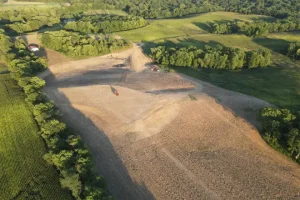
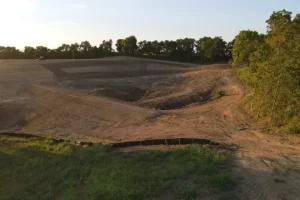
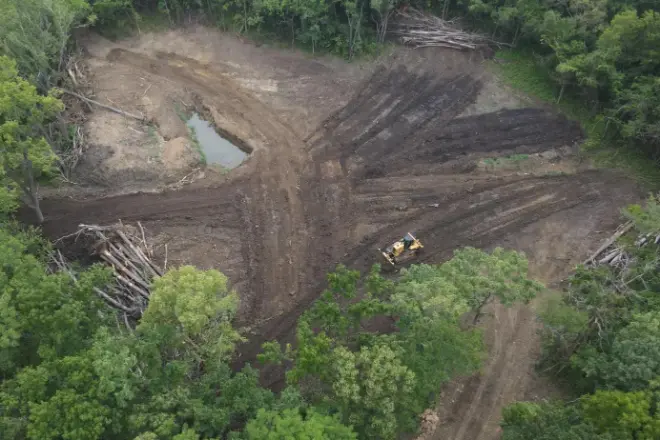
We’ll also illustrate our abandoned pond restoration process by using a project we completed for a client in Perry, KS.
By the end of this post, you’ll have all the tips and know-how to transform an unsightly pond installation into a vibrant, healthy water feature that boosts your property’s value and recreational potential.
Step 1: Assessing the Current Condition of the Pond
Before beginning the pond restoration process, it’s essential to understand the state of the pond, including water levels, sediment buildup, and the health of the surrounding ecosystem.
Assessing the pond thoroughly will highlight key issues to address, from restoring water levels to managing silt and vegetation.
Drainage and Water Levels
Draining the old pond is the first step in evaluating its condition accurately.
- Importance of Drainage: Draining the pond reveals structural issues and allows for a close inspection of the pond bottom. This step is crucial in identifying weak spots and ensuring long-term stability.
- Detecting Water Loss Points: As the pond drains, check for cracks or leaks along the pond bottom and edges that could be why your pond or lake is leaking.
Dam and Spillway Inspection
The condition of the dam and spillway directly affects water retention and overflow control.
- Checking for Structural Integrity: Inspect the dam for signs of erosion, cracks, or slumping. Addressing these issues prevents unexpected leaks and ensures water levels stay consistent.
- Evaluating Spillway Sizing: Make sure the spillway can handle current drainage needs, especially during heavy rains. An adequately sized spillway helps manage excess water and prevents potential flooding or erosion damage.
Sediment and Silt Accumulation
Excessive silt buildup is common in abandoned ponds, leading to shallow water and reduced capacity.
- Measuring Sediment Depth: Determine the extent of silt to plan for effective dredging. Too much sediment can stifle plant growth and negatively impact the pond’s habitat.
- Impact on Depth and Habitat: A thick layer of silt disrupts the pond’s ecosystem by reducing water depth and limiting areas for wildlife and fish to thrive.
Erosion and Watershed Impact
Analyzing the watershed area and sources of erosion around the pond helps prevent future siltation.
- Identifying Erosion Sources: Look for areas where water runoff is causing soil erosion, which leads to siltation in the pond.
- Understanding Watershed Dynamics: The surrounding landscape and slope affect how water enters the pond. Managing erosion at its source helps maintain a healthy and balanced ecosystem over time.
This thorough assessment sets a solid foundation for restoring a well-maintained pond that benefits both the environment and the property.
Step 2: Preparing for Restoration Work
Once the pond’s condition has been assessed, preparing the area is crucial to ensure successful pond restoration.
Clearing vegetation, arranging equipment, and planning the right season for work all contribute to an efficient restoration process.
Clearing Vegetation and Overgrowth
Removing overgrown vegetation is essential to restoring old ponds to a healthy state.
- Eliminating Trees and Weeds: Trees like cottonwoods can sap the pond’s water, while weeds may clog shallow water areas. Removing these ensures better water flow and helps maintain desired water levels.
- Clearing Banks and Edges: Trim back growth along the pond’s edges to improve access and prevent debris from falling into the pond, which can contribute to silt buildup and poor water quality.
- Managing Vegetation Carefully: Keep native plants that support a balanced habitat while removing invasive species. This approach supports natural wildlife and keeps the pond from becoming overgrown again.
Excavation Equipment and Machinery
The right tools make the restoration process faster and more effective, especially for tasks like sediment removal and dam repairs.
- Dredging and Excavation Equipment: Heavy-duty equipment such as backhoes, dredgers, or small excavators are useful for clearing silt and reshaping pond banks. This machinery is essential for achieving a healthy pond depth and supporting a varied habitat.
- When to Hire Professionals: For extensive excavation or dam repairs, consider hiring a professional crew with the necessary expertise and equipment. Professionals ensure good health for the pond by creating proper depths and slopes.
Ideal Timeline and Season for Restoration
Timing the project correctly can make a significant difference in efficiency and outcomes.
- Choosing the Right Season: Late summer to early fall is ideal, as lower water levels and drier soil make excavation and equipment access easier.
- Avoiding Rainy Seasons: Heavy rains can delay work and increase soil erosion, making it harder to control water levels and bank stability.
- Planning for Seasonal Challenges: Dry months provide the best conditions for clearing and reshaping, allowing crews to restore existing ponds with minimal disruption to the surrounding landscape.
Preparing thoroughly at this stage will help create a well-maintained pond that can better support wildlife and remain clear of invasive growth over the long term.
Step 3: Deepening and Reshaping the Pond
To transform an old pond into a healthy, stable water feature, deepening and reshaping the pond is essential.
These adjustments create an environment that not only supports wildlife but also ensures the pond’s longevity and visual appeal.
Follow the link to learn more about how to build a wildlife pond.
Shaping Slopes and Edges
Properly shaped slopes and edges are critical for a healthy pond that can withstand erosion and encourage sustainable plant growth.
- Slope Recommendations: Aim for a 3:1 slope on the dam front and a 5:1 slope on the backside. These gentle inclines help prevent soil erosion, particularly in shallow water areas.
- Long-Term Erosion Control: Well-graded banks help prevent soil erosion, keeping the pond stable even during heavy rains or seasonal changes. This structure also discourages weeds and minimizes debris buildup around the pond edges.
Sediment Removal and Silt Dredging Techniques
Removing excess silt and sediment improves water quality and increases the pond’s depth, giving wildlife a more robust habitat.
- Effective Dredging: Use dredging equipment to extract silt from the pond bottom, restoring depth and enhancing water clarity. For an effective outcome, consider hiring a professional to dredge the pond if there is a significant buildup.
- Reusing Dredged Material: Reuse silt to fill in low-lying areas around the landscape or reinforce pond banks. This approach is sustainable and can help with erosion control on the site.
Creating Fish Spawning and Feeding Areas
Adding features specifically for fish and wildlife creates a more inviting and balanced ecosystem.
- Adding Shallow Water Zones: Create small, shallow areas along the pond edges to encourage spawning and foraging. These areas allow smaller fish to thrive and give other wildlife, like amphibians and birds, a safe space to gather.
- Gravel Beds and Trenches: Placing gravel beds or digging shallow trenches provides ideal breeding areas, enhancing the pond’s function as a habitat for various species.
These modifications ensure the pond is not only attractive but also a thriving habitat for fish, amphibians, and other wildlife.
Deepening and reshaping lay the foundation for a pond that will remain functional and visually appealing for years to come.
Step 4: Repairing or Reconstructing the Dam and Spillway
The dam and spillway are crucial to maintaining pond water levels, controlling overflow, and ensuring the pond’s stability.
Strengthening or reconstructing these structures helps restore the pond’s functionality and minimizes future maintenance issues.
Evaluating the Dam Structure
Assessing the dam’s current stability is the first step in creating a secure foundation for the pond.
- Checking for Damage: Look for signs of erosion, cracks, or weak spots on the dam. These issues can lead to leaks or even dam failure over time.
- Adding a Core Trench and Clay: A core trench filled with compacted clay is essential for long-term water retention, particularly for so-called “ghost ponds” or older ponds that may have lost their original sealing layers.
- Reinforcing for Strength: If necessary, consider widening or increasing the height of the dam to improve its ability to hold water levels and withstand heavy rainfall.
Constructing or Reinforcing Spillways
Spillways help control water flow and protect the dam from excessive pressure during high-rain events.
- Installing Principal and Emergency Spillways: Add a principal spillway to handle routine water flow and an emergency spillway for managing excess water during storms.
- Sizing and Positioning: Properly sized spillways prevent erosion around the dam by directing overflow away from vulnerable areas. This approach helps protect the pond from overflow damage.
- Using Riprap for Erosion Control: Line the spillways with riprap or other erosion-resistant materials to prevent soil washout and maintain clear water flow.
Adding Riprap and Erosion Protection
Erosion can quickly weaken a pond’s banks and dam, so taking preventive steps is essential for long-term stability.
- Applying Riprap to Dam Slopes: Layering riprap on the slopes helps secure the soil and withstands water flow from rainfall or overflow events.
- Planting Vegetation on Banks: Introducing native plants along the pond’s edges helps secure soil, preventing erosion and promoting wildlife habitat.
- Protecting Vulnerable Areas: Place riprap around spillways and high-traffic areas of the pond to add further protection against erosion.
By reinforcing the dam and spillway, you ensure that the pond’s infrastructure can handle water level changes, keeping the pond safe and well-maintained for years to come.
Step 5: Enhancing the Pond’s Ecosystem and Recreational Features
Restoring a pond to a vibrant, thriving ecosystem involves more than just structural repairs.
Adding features that promote a balanced habitat and support wildlife can transform an old pond into a natural attraction and recreational space.
From fish habitats to shoreline vegetation, each element helps create a sustainable and visually appealing environment.
Installing Structures for Fish Habitats
Creating varied habitats for fish is essential to maintaining a healthy, balancedpond ecosystem.
- Underwater Shelves and Islands: Adding shelves, islands, or shallow shelves provides safe spaces for fish to rest, feed, and spawn. These structures also attract amphibians and birds looking for food or shelter.
- Gravel Beds and Trenches: Install gravel beds and small trenches on the pond bottom to encourage fish breeding and support other species.
- Logs and Rock Piles: Incorporating logs or rock piles can mimic natural habitats, giving fish protective spots to thrive and attracting more wildlife to the pond.
Adding Aquatic Plants and Shoreline Vegetation
Planting aquatic and shoreline vegetation supports water quality and bank stability, creating a healthier environment for all species.
- Aquatic Plants for Water Quality: Species like cattails and water lilies filter silt and debris, reducing cloudiness and helping maintain clean water. These plants also provide natural cover for fish. Find out how long it takes for a new pond to settle here.
- Shoreline Grasses and Trees: Grasses and small trees along the edges help prevent erosion and protect the pond banks. This vegetation acts as a buffer, capturing debris and preventing runoff from disturbing the pond’s balance.
- Supporting Natural Vegetation: Allowing a mix of native plants around the pond encourages wildlife while maintaining the area’s natural beauty.
Grading the Dam and Planting Grass Cover
Planting a grass cover on the dam not only strengthens its structure but also enhances the pond’s appearance.
- Erosion Control with Grass: Planting grass on the dam and around pond edges helps secure the soil, minimizing erosion during storms or high water levels.
- Choosing Native Grass Species: Opt for native grasses that thrive in the local climate and support the surrounding habitat without invasive tendencies.
- Encouraging Healthy Growth: Grassroots stabilize the soil and support a sustainable habitat for small animals and birds, adding to the pond’s ecosystem diversity.
By adding these enhancements, you create a habitat that supports a range of species and keeps the pond attractive and functional for recreational use.
This step ensures that the pond remains a lively and scenic part of the landscape for years to come.
Step 6: Refilling and Stocking the Pond
Once restoration work is complete, the pond can gradually refill through rainfall and natural storm runoff.
This natural process helps to replenish the water level steadily, reducing the risk of erosion and maintaining a balanced ecosystem from the start.
Gradual Water Refilling Process
Allowing the pond to fill through natural sources like rain and storm runoff is ideal for both the pond structure and its ecosystem.
A slow refilling process helps stabilize the pond’s banks and allows soil and clay to settle properly.
- Controlled Refilling: Unlike manually refilling with a hose or well water, natural filling through rainfall and runoff encourages steady water level increases, which minimizes stress on newly repaired areas.
- Monitoring Water Depth: Regularly monitor the water depth to ensure it’s filling as expected without leaks or seepage. This also allows you to gauge if the dam and spillways are functioning properly.
Stocking Fish and Supporting Aquatic Life
As the pond naturally refills, consider carefully planning the addition of fish and other aquatic life to ensure a balanced habitat.
- Choosing Fish Species: Select fish that suit your pond’s depth, size, and intended use. Many acreage pond owners find species like bluegill, bass, and catfish ideal for supporting both a healthy ecosystem and recreational fishing.
- Gradual Introduction: Once the pond reaches an adequate depth, fish are introduced gradually to prevent overcrowding and allow them to acclimate to their new environment. This also gives natural bacteria and plants time to stabilize, which helps support fish health.
Vegetation and Erosion Control for Water Quality
Enhancing the pond’s ecosystem with native vegetation around the pond edges can promote water clarity, help control erosion, and support long-term health.
- Native Plants for Erosion Control: Planting grasses and other Kansas native plant species around the banks can reduce soil erosion and prevent silt from clouding the pond water.
- Improving Water Quality: Aquatic plants, such as water lilies and cattails, help maintain water clarity by absorbing excess nutrients and providing cover for fish and other wildlife.
Refilling through rainfall and runoff establishes a sustainable water source for your pond, promoting a naturally balanced and resilient aquatic environment.
Step 7: Maintenance and Long-Term Care of the Restored Pond
With the pond restoration complete, ongoing maintenance is crucial to preserving water quality, stabilizing surface areas, and supporting an abundance of wildlife.
Regular upkeep keeps the pond functioning at its best, ensuring it remains a valuable resource for the long term.
Routine Sediment and Silt Management
Monitoring and managing sediment buildup is essential to maintaining a deep and healthy pond.
- Seasonal Sediment Removal: Plan for sediment removal each season, especially in shallow water feature areas where silt naturally collects. Regular dredging helps maintain adequate surface and depth for fish habitats.
- Cost-Effective Management: Minor, routine sediment management can prevent costly dredging down the line, protecting the pond’s depth and clarity.
- Preventing Over-Accumulation: Be vigilant about soil erosion sources, particularly in regions that experience heavy rain, as this runoff is a primary source of sediment buildup.
Regular Dam and Spillway Inspections
Inspecting the dam and spillway structures periodically ensures that water control systems remain effective and protect against leaks or overflow.
- Inspect for Cracks or Leaks: Check the dam for cracks or leaks that may develop over time. Spotting these early helps preserve the pond’s integrity and prevents issues that may require more extensive repairs.
- Maintaining the Spillway: Clear any debris that could obstruct the spillway and keep water flowing properly. A well-maintained spillway prevents overflow and flooding, especially after heavy rainfall.
- Erosion Protection: Keep an eye on the areas around the dam and spillway where erosion can weaken the structure. Adding riprap or native vegetation can stabilize the soil and reduce erosion risks.
Managing Aquatic Weeds and Invasive Species
Controlling weeds and invasive plants keeps the pond’s ecosystem balanced and protects local wildlife habitats.
- Regular Weed Removal: Manually remove weeds and overgrown plants from the surface and edges to prevent them from overtaking the pond. Regular clearing keeps water levels stable and promotes an open, balanced ecosystem.
- Invasive Species Monitoring: Watch for invasive species that can damage the local ecosystem and take prompt action to remove them if detected. Invasive plants and fish can quickly crowd out native species and alter the pond’s water quality.
- Supporting Native Vegetation: Promote the growth of native plants around the pond. These many different types of vegetation not only help stabilize the soil but also encourage a more diverse habitat for farmers looking to support local wildlife and maintain a natural environment.
Regular maintenance will ensure your pond restoration efforts endure, keeping the pond attractive and functional for years to come.
With proper care, your restored pond will remain a thriving natural feature, benefiting both local wildlife and the surrounding landscape.
Case Study Example: Randy’s Neglected Farm Pond
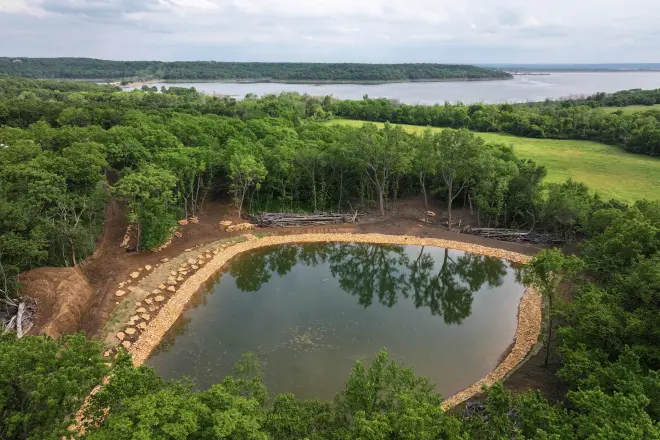
Over time, many farm ponds become overgrown and lose their functionality, with water retention issues, overgrowth, and silt buildup.
Randy’s pond in Perry, KS, was no exception.
Once neglected and choked with vegetation, it had become an unsightly, nearly unusable feature on the property.
By implementing a comprehensive restoration plan, the pond was transformed into a beautiful, functional space.
Solution Provided
Action Taken
To restore Randy’s pond, the team began by addressing key issues that had accumulated over years of neglect:
- Clearing Overgrowth: Thick vegetation, including trees and weeds, was cleared away. This crucial step improved accessibility, helped stabilize the pond’s edges, and reduced water loss caused by plant interference.
- Excavating Excessive Silt: Years of silt buildup had decreased pond depth and limited water quality. Removing the excess silt helped restore the pond’s depth, improving its ability to maintain water levels and support aquatic life.
- New Dam Construction: A new dam was built in front of the old dam with a compacted clay core, creating a stable foundation for water retention. This reinforcement not only prevented leaks but also ensured the dam’s durability against erosion.
Process
The restoration followed a structured approach tailored to the specific needs of the pond:
- Vegetation and Site Clearing: Clearing invasive growth around the pond was the first step. This opened access to heavy machinery and allowed for easier excavation.
- Silt Removal: Dredging out years of accumulated silt improved the pond’s depth and water quality, creating a healthy environment for fish and other wildlife.
- New Dam Reinforcement: The dam was reconstructed with a compacted clay core, enhancing its strength and water-retention capabilities. This ensured a stable structure to support long-term pond functionality.
Outcome: Randy’s Recreational Pond Restored
By addressing these issues, Randy’s pond was transformed into a stunning, fully functional water feature.
The revitalized pond now enhances the property’s natural beauty, provides a healthy habitat for wildlife, and offers recreational space.
This case underscores the power of a well-executed restoration plan to turn a neglected pond into a valuable, lasting asset.
Restore Your Pond with Bulletproof Pond and Lake
Restoring an old pond brings fresh life to your property, enhancing both its beauty and utility.
Whether it’s improving water quality, stabilizing banks, or creating a habitat for wildlife, a revitalized pond can be a lasting asset.
If you’re ready to transform your pond, Bulletproof Pond and Lake has the experience and expertise to handle all aspects of pond restoration and construction.
Fill out our contact form today, or give us a call to discuss how we can help you create the pond of your dreams!